

The very first question that comes to mind when a water heater stops working or becomes inefficient is how much does it cost to install a hot water heater? If you want to make an informed and budget friendly decision then understanding about the cost is very crucial whether you are upgrading or replacing your unit.
In this guide Mile Hi HVAC explains everything about everything from pricing factors to the installation costs. This helps you to clearly understand the cost to install a water heater and avoid unexpected expenses.
Average Cost to Install a Hot Water Heater
So the average water heater installation cost typically falls between $800 to $3500. This pricing depends upon a lot of factors like type, size and labor requirements.
This is a general breakdown of it:
- Tank Water Heater: $800 – $2,000
- Tankless Water Heater: $1,500 – $3,500
- Hybrid Water Heater: $1,200 – $3,000
This shows variations in prices so it is only due because water heater cost and installation differs significantly based on your specific needs and home setup.
Read More: What Is a Hybrid Water Heater?
Water Heater Installation Cost Comparison — 2026
All figures reflect MileHi HVAC field data. Totals include unit, labor, permits & disposal.
| Type | Unit Cost | Labor | Permits & Extras | Total Range |
| Tank — gasMost popular | $400 – $900 | $300 – $700 | $100 – $250 | $800 – $1,850 |
| Tank — electric | $300 – $700 | $250 – $600 | $100 – $200 | $650 – $1,500 |
| Tank — large (75 gal) | $600 – $1,200 | $350 – $750 | $150 – $300 | $1,100 – $2,250 |
| Tankless — gasEnergy saver | $800 – $1,500 | $500 – $1,500 | $500 – $1,000 | $1,800 – $4,000 |
| Tankless — electric | $700 – $1,300 | $500 – $1,500 | $1,000 – $2,500 (panel upgrade) | $2,200 – $5,300 |
| Hybrid heat pumpBest efficiency | $1,200 – $2,500 | $800 – $2,000 | $300 – $800 | $2,300 – $5,300 |
| Hybrid heat pump units qualify for up to $2,000 federal tax credit + utility rebates of $300–$800, which can significantly reduce your net out-of-pocket cost. | ||||
You may read When To Replace Water Heater?
Factors That Affect Installation Cost
You can accurately estimate your budget and expenses through understanding the cost to install a water heater.
Unit size and capacity
As we know that home size also matters. Larger homes require larger tank heaters which significantly increases the equipment and labor costs.
- Small units (30–40 gallons): Lower cost
- Large units (50–80 gallons): Higher cost
Labor and installation complexity
The charges of labor also varies depending upon factors like:
- Plumbing modification
- Installation difficulty
- Upgrading of electrical or gas lines
Professional servicing from Milehi HVAC ensures you safe and efficient installation however more difficulty in work increases the cost to install a water heater.
Accessibility and location
Another important factor to consider is that if your water heater is located in a hard to reach area like the basement then the installation may take longer time and also costs more.
This factor also directly affects the water heater cost and installation.
Removal of old unit
If you are removing the old unit this involves several things like:
- Safe disposal
- Disconnecting and draining
If the unit is larger or outdated this adds to the water heater replacement cost.
Cost Breakdown by Fuel Type
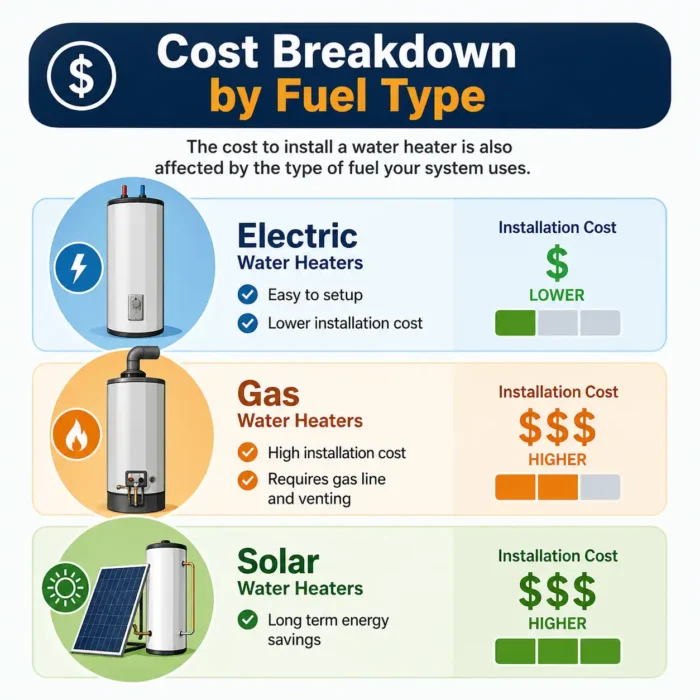
The cost to install a water heater is also affected by the type of fuel your system uses.
Electric water heaters
- Easy to setup
- Lower installation cost
- Lower upfront water heater cost and installation
Gas water heaters
- High installation cost
- Requires gas line and venting
- Higher water heater replacement cost
Solar water heaters
- Long term energy savings
- Have higher upfront cost
Cost Comparison: Tank Vs Tankless Water Heaters
One of the biggest decisions is choosing between the tank and tankless water heaters which also affects the water heater installation cost.
Tank Water Heaters
- Easy to install
- Lower upfront cost
- Lifespan of almost 8-12 years
Tankless Water Heaters
- Energy efficiency
- Higher initial cost
- Longer lifespan of almost (15-20 years)
Another plus point of tankless systems is that although they increase the initial cost to install a water heater but with time through efficiency they save money.
How to Save on Installation Costs
Although water heater installation cost is high but there are some ways for reducing expenses like:
Choosing the right size
Avoid spending on larger units that you don’t even need.
Compare quotes
Try to get multiple estimates from trusted providers like MileHi HVAC
Schedule off season installation
As during the off peak seasons costs are lower than usual.
Consider energy efficient models
The best thing is that although the upfront cost is higher, long term savings reduce the overall water heater cost and installation.
You may read How Long Does a Gas Water Heater Last?
Emergency vs. Planned Installation Costs
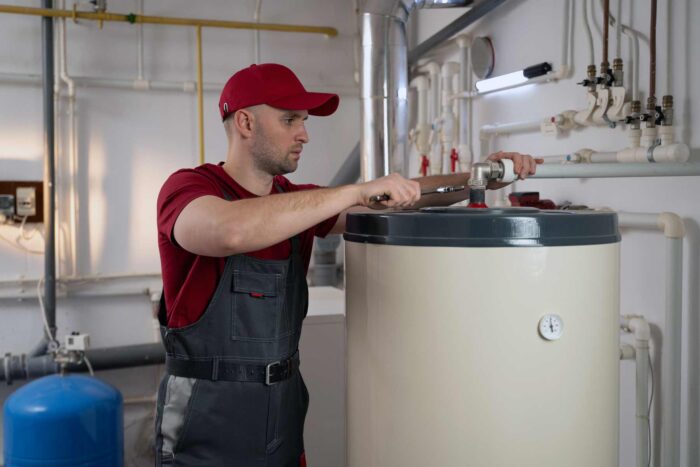
If you wait until your water heater fails completely, you’re going to pay a lot more than you need to. Emergency installations typically carry a 40–60% price premium covering immediate dispatch fees and overtime labor. On a job that might normally cost $1,500, that adds $600–$900 before anyone even looks at the unit.
There’s also the selection problem. During an emergency you get whatever is in stock that day — not the most efficient model or the best fit for your home. A planned replacement puts you in control, lets you compare options, and keeps you eligible for federal tax credits and utility rebates. Most homeowners who plan ahead save $800–$1,500 compared to an emergency call.
Signs you need a new water heater
If you are confused in deciding whether it’s time to invest or not. Here is the most simple way to watch for these signs.
- Rusty or discolored water
- Strange noises
- Leaks around the unit
- Inconsistent hot water
So if you face these types of issues it means that water heater replacement cost becomes a necessary investment rather than an option. For saving both money and the system it is recommended to take early action.
Additional costs
Some extra expenses also affect the total water heater cost and installation beyond the basic installation.
Permits
Some areas require permits for installation which adds $50 to $300 to the total cost.
Upgrading of venting systems
In case of gas water heaters they require some venting improvements which significantly increases the water heater replacement cost.
Electrical upgrades
Panel upgrades also cost more if you are switching to electric or tankless systems.
Installation of expansion tank
For managing pressure level there is need of an expansion tank which adds up to the water heater installation cost.
How To Choose the Right Hot Water Heater
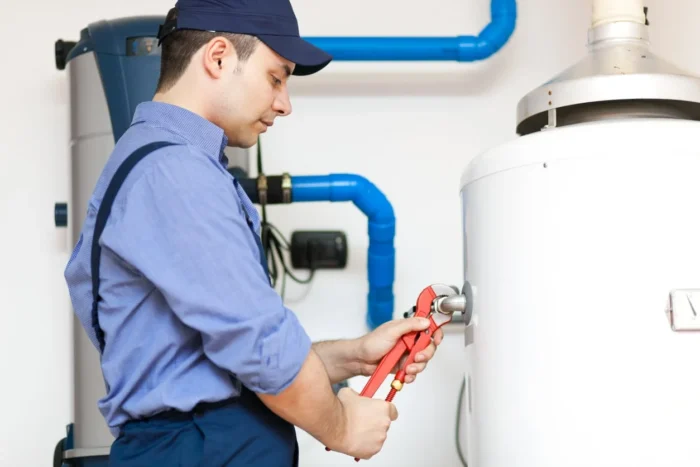
Wrong size? You’re either running out of hot water or paying to heat water you’ll never use. Here’s how to get it right.
Figure Out Your Size
Tank models: Living alone or with one other person? 30-40 gallons handles it. Two or three people need 40-50 gallons. Got 3-4 people? Go 50-60 gallons. Family of five or more needs at least 75 gallons or you’re fighting over shower time.
Tankless models: These are measured by flow rate. Small house? 2-3 gallons per minute works. Medium home needs 4-6 GPM. Big house where everyone showers at 7 AM? You want 7+ GPM or someone’s getting lukewarm water.
Think about your morning routine. If three people shower, someone’s doing dishes, and the washing machine is running, you need more capacity than the chart says.
Pick Your Fuel Type
Got natural gas already? Stick with it—it’s the cheapest to run month after month. Electric works anywhere but costs more on your utility bill. Rural area without gas? You’re probably using propane.
Efficiency matters: Heat pump models cut your energy bill by 60%. Tankless units only heat water when you turn on the tap—no keeping a tank hot all day. High-efficiency gas tanks have better insulation so they don’t waste as much energy.
Talk through your actual hot water needs with whoever’s installing it. They should ask about your daily routine, not just count how many people live there.m
DIY vs. Professional Water Heater Installation
Most homeowners consider DIY for installation but it is always not a good idea.
DIY installation
- Lower installation cost
- Risk of mistakes
- Potential safety hazards
Professional installation
- Safe and efficient
- Warranty protection
- Accurate cost to install water heater estimation
Seeking help from our experts at Milehi HVAC ensures proper installation and avoids costly repairs.
Hot Water Heater Replacement vs New Installation
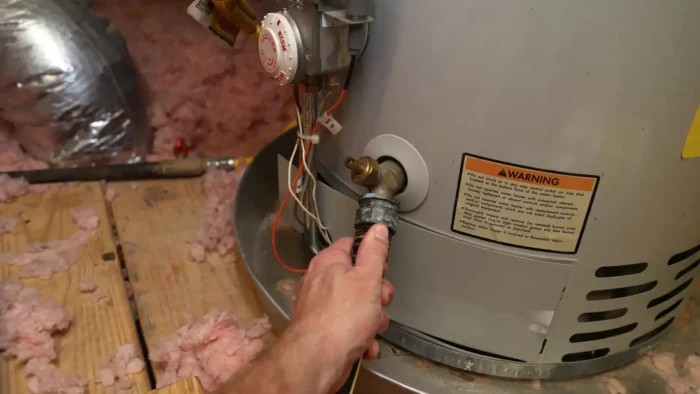
Fitting a replacement system is not the same as having a new system. The replacement work usually entails taking away the old unit and checking connections, and perhaps bringing out-of-date work up to current standards.
The hot water heater replacement cost may also include disposal fees and minor plumbing repairs. MileHi HVAC makes a wise assessment of the current situation between Rolling Resistance and the Bones, or a full overhaul is required.
Signs It’s Time to Replace Your Water Heater
Some of the most common symptoms of a broken water heater are hot water that is inconsistent in supply, unusual sounds, rust-colored water, or leaks that are noticed. Efficiency warnings can also lead to rising energy bills. Don’t neglect these symptoms; you might just save yourself a panic breakdown.
Changing out the unit while it is still functioning helps homeowners avoid water damage and losing hot water. MileHi HVAC recommends proactive replacement as systems near the end of life.
When Upgrading Makes Financial Sense
The longrun operating costs can be lowered by installing a new, energy-saving model. The up-front cost may be higher, but greater efficiency usually means reducing monthly energy bills.
Tankless and high-efficiency models are particularly advantageous for large families. MileHi HVAC assists homeowners in calculating return on investment to find the best value.
Why Professional Installation Matters
The right installation allows your water heater to run safely and efficiently. Improper installation can cause leaks, pressure problems, or even lead to carbon monoxide hazards in gas systems. That’s why it’s necessary to have it professionally installed.
MileHi HVAC complies with manufacturer protocols and local building codes to ensure your home and investment are protected. Professional installation of the system also preserves the warranty and increases the life of the equipment.
The MileHi HVAC Installation Process
MileHi HVAC starts with a comprehensive inspection and consultation to cater to your priorities. Service providers then suggest appropriate options and communicate prices in a clear manner before the work starts.
The installation process involves: safely removing old units, accurately installing the new system, testing it, and teaching the homeowner. This ritual method provides you with confidence and peace of mind.
Warranties and Long-Term Support
Professional installation includes labor warranties and manufacturer guarantees. That’s protection this house owner can live with, no surprise repair bill to pay down the road.
MileHi HVAC provides continued maintenance and support to ensure systems are performing efficiently year after year. Long-term service relationships have value beyond the day of installation.
Conclusion
Understanding how much to install hot water heater systems helps you plan your budget and choose the right option for your home. Costs range from $800 for basic tank replacements to $4,500 for advanced tankless or hybrid systems. Your specific situation depends on the unit type, your home’s infrastructure, location, and any necessary upgrades. Working with trusted professionals ensures code-compliant installation that protects your investment and family safety.
Milehi HVAC provides expert water heater installation in Denver that residents trust for quality workmanship and fair pricing. Our licensed technicians handle every aspect of your installation professionally, from permits to final testing. Contact us today for a detailed quote on your water heater replacement and experience the difference professional service makes.
FAQs
How long does water heater installation take?
Most installations take 2 to 4 hours for direct replacements. Complex installations requiring electrical upgrades, gas line modifications, or venting changes can take 6 to 8 hours or span multiple days.
Do I need a permit for water heater installation?
Most jurisdictions require permits for water heater installations. Permit costs range from $50 to $300 depending on your location. Professional installers typically handle permit applications and inspections as part of their service.
What size water heater do I need?
Household size determines capacity needs. One to two people need 30-40 gallons, three to four people require 40-50 gallons, and families of five or more should choose 60-80 gallon tanks or tankless systems.
How long do different water heater types last?
Tank water heaters last 10 to 15 years with proper maintenance. Tankless models typically run 20 years or more. Hybrid heat pump units last 13 to 15 years on average.