


Your AC has been running all day and suddenly you hear it — a strange water sound coming from the unit. Maybe it sounds like someone left a faucet running in the next room. Or maybe it is more of a gurgle, like water moving through a pipe.
Why does my AC sound like running water? That is one of the most common questions we get at MileHi HVAC. The answer depends on where the sound is coming from and when you hear it. Some causes are nothing to worry about. Others need attention before they cause real damage.
Unusual Water Sounds Your Air Conditioner May Make
Air conditioners do more than just cool the air. They also remove moisture from it. This moisture turns into liquid water. Normally, you should not hear this process. If you hear splashing, bubbling, or a steady stream, something is wrong.
A splashing sound often means water is hitting the fan. A gurgling sound usually points to a clog. A steady running water sound often suggests a leak or a full drain pan. Identifying the specific noise helps us find the root cause faster.
Common Causes of Water Dripping from an AC
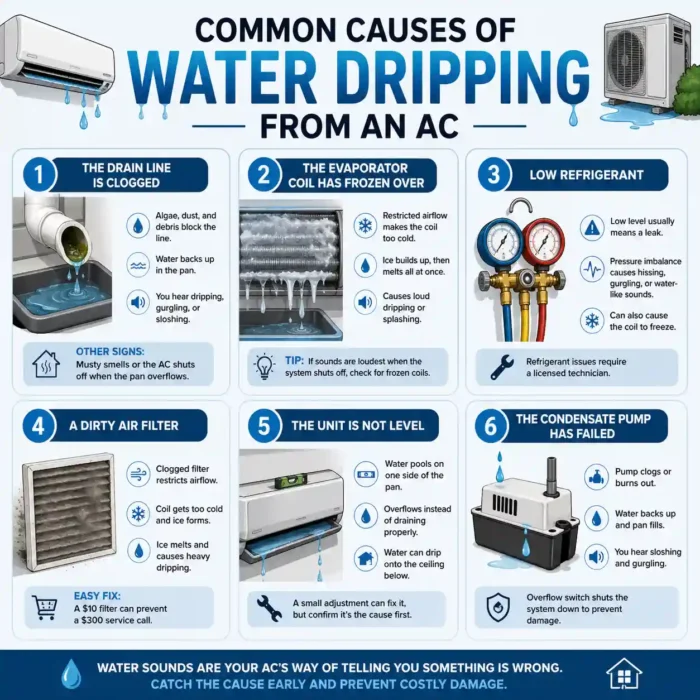
The Drain Line Is Clogged
This is the number one reason homeowners call us about water sounds. Here is how it works: your AC pulls moisture out of the air as it cools your home. That moisture turns into condensation on the evaporator coil and drips down into a pan. From the pan, it flows out through a drain line — usually a small PVC pipe that exits near your outdoor unit or into a floor drain.
Over time, algae, dust, and debris build up inside that line. Water cannot get through cleanly. It backs up into the pan. The pan fills up. Then you start hearing dripping, gurgling, or sloshing as water has nowhere to go.
Other signs the drain line is the problem: you smell something musty near the indoor unit, or the AC shuts off on its own when it should still be running. Many systems have a float switch that kills the power when the pan overflows — that is the system protecting your home from water damage.
The Evaporator Coil Has Frozen Over
When airflow gets restricted — from a dirty filter, closed vents, or blocked returns — the evaporator coil gets too cold. Moisture in the air freezes right onto it. Ice builds up. Then when the system cycles off or the thermostat kicks it out of cooling mode, all that ice melts at once.
Water comes off the coil fast. The drain pan gets hit with more water than it was designed to handle at one time. You hear loud dripping or splashing. If the ice buildup was significant, the water can actually overflow the pan.
If the air conditioner making water sounds is loudest right when the system shuts off, frozen coils are a real possibility worth checking.
Low Refrigerant
Refrigerant does not get “used up” like gasoline. If the level is low, there is a leak somewhere in the system. Low refrigerant changes the pressure balance inside the lines, and that pressure imbalance creates sounds — sometimes a hiss, sometimes a gurgle, sometimes something that genuinely sounds like water running through a pipe.
Low refrigerant also causes the evaporator coil to run colder than it should, which circles back to the freezing problem above. If you suspect a refrigerant issue, this is not a DIY fix. Refrigerant handling requires a licensed technician.
A Dirty Air Filter
A clogged filter is behind more AC problems than most homeowners realize. When the filter cannot pass enough air, the coil temperature drops. Ice forms. Water drips hard when the ice melts. This is one of those situations where a $10 filter prevents a $300 service call.
Check your filter right now if you have not done it recently. Hold it up to the light. If you cannot see through it, replace it.
The Unit Is Not Level
If the air handler inside your home was not installed level — or has shifted over time — condensation may pool on one side of the pan instead of flowing toward the drain. Water sits there, eventually overflows, and you hear dripping. In some cases water ends up on the ceiling below the unit.
A small adjustment to the mounting bracket can fix this. But first you need to confirm that is the cause.
The Condensate Pump Has Failed
Not every home can drain the condensate line by gravity. Basements and certain split-system setups use a small pump to push the water out. If that pump clogs or burns out, water backs up fast. The pan fills. You hear sloshing and gurgling. Then the overflow switch shuts the system down — if the system has one.
Condensate pump failures are straightforward to diagnose and the pump is inexpensive to replace.
Read More: Why Does My Air Conditioner Smell?
How to Deal with AC Water Noises
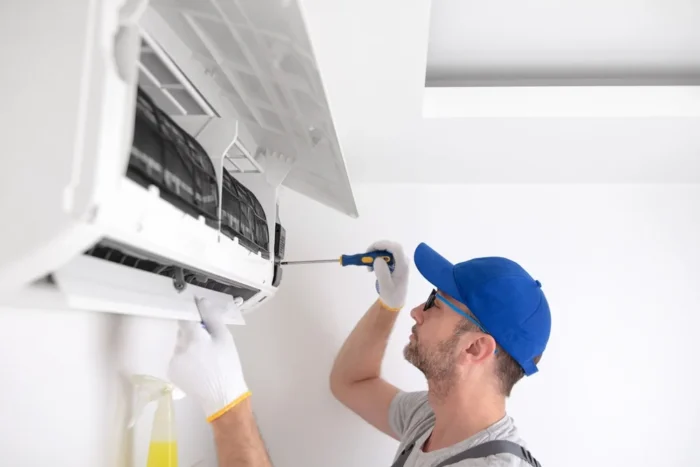
If you hear water, turn the system off immediately. This prevents more water from leaking into your home. Check your air filter first. A dirty filter blocks airflow and causes the system to freeze up.
Next, look at the drain pan under the indoor unit. If it is full of water, the drain line is likely blocked. You can try to clear the line using a wet-dry vacuum on the outside opening of the pipe. If the water does not clear, you need professional help to avoid mold growth.
What Other Water Sounds Can an Air Conditioner Make?
Some homeowners hear sounds that are harder to place. A bubbling or percolating sound — almost like a fish tank — often means moisture has gotten into the refrigerant lines or there is a refrigerant issue. This needs a technician.
A hissing sound combined with what sounds like running water is a red flag. That combination often points to a refrigerant leak. Shut the system off and call for service.
Sometimes the sound is actually coming from ductwork. Cool air running through ducts that sweat can drip onto other surfaces. The dripping sound seems to come from inside the wall or ceiling, and homeowners assume it is the AC unit when the real issue is duct insulation.
Intermittent water sounds — a few drips, then silence, then a few more drips — are usually just normal coil drip-off after the system cycles. That is not something to worry about unless the dripping is heavy or leaves standing water.
How This Water Removal Might Go Wrong
Even when the AC drains correctly, a few things can go sideways.
The drain line may discharge in a bad spot. If it empties right against your foundation, that moisture can work into your crawl space or basement over a season. Check where your condensate line actually exits and make sure it drains away from the structure.
The overflow float switch can fail in the “off” position, meaning it keeps the system from running even after you fix the actual drainage problem. Or it can fail in a way that never triggers, allowing water to overflow without shutting the system down. Either way, a failed float switch needs replacement.
Homeowners sometimes patch a clogged line with the wrong size pipe or fittings. That creates air pockets inside the line, which causes gurgling sounds and slows drainage even when the line is technically clear.
And if duct insulation is worn or missing, the sweating ducts problem can be misread as an internal AC issue — leading to unnecessary service calls.
AC Water Noises Change With the Seasons
High humidity in summer means your AC is pulling a lot of moisture out of the air. More condensation means the drain line has to move more water. A partial clog that caused no problems in April can start overflowing in July when the system is working hard.
At the start of every cooling season — usually early spring here in Denver — algae in the drain line can have grown all winter. The first time you run the AC, drainage gets sluggish immediately. A vinegar flush before the season starts prevents that.
Fall is the other tricky time. If you have had the system off for a few weeks, then run it during a warm spell, you may hear more water noise than usual as the system handles the first burst of condensation on a coil that sat idle.
When to Call Professionals
There is a clear line between what homeowners can handle and what needs a technician.
Do the filter, vinegar flush, and shop vac check yourself. Those are maintenance tasks, not repairs. If those steps fix the sound, great.
Call a professional if you hear hissing with the water sounds — that combination suggests refrigerant. Call if water is staining your ceiling or walls, because overflow has likely been happening longer than you think. Call if the drain pan is cracked or corroded, since a damaged pan cannot hold water and will keep causing problems until it is replaced.
Call if ice keeps forming on the coil even after you replace the filter. That usually means refrigerant is low, which requires a certified technician. And call if the sounds are coming from a location you cannot access or identify.
At MileHi HVAC, our Denver AC repair service team diagnoses these issues on the same day in most cases. Water problems that go unaddressed turn into mold, ceiling damage, and bigger repairs — so catching them early matters.

Preventing AC Water Sounds Before They Start
Replace the filter every 60 to 90 days. Flush the condensate drain with vinegar every three months. Schedule a professional tune-up once a year before summer heat kicks in. Keep vents and returns open throughout your home. Check the drain pan twice a season for standing water.
Those five habits will keep things quiet.
Conclusion
An ac unit making water noise is almost always telling you something about drainage or airflow. Most of the time the fix is simple — a new filter, a flushed drain line, or a thawed coil. But some causes, like refrigerant leaks or a cracked drain pan, need a professional before they turn into expensive damage. If you are in the Denver area, MileHi HVAC is here to handle it. Reach out today and get the problem diagnosed before a small sound becomes a big repair bill.
Frequently Asked Questions
Is it normal for my AC to drip water sounds after it shuts off?
A short dripping sound right after shutdown is normal. Residual condensation falls off the coil. If the dripping goes on for more than a few minutes or is very loud, check the drain line and evaporator coil.
Why does the gurgling sound happen mostly in summer?
High humidity means more condensation and more water moving through the drain system. Even a small partial clog that was fine in spring can become a real problem when summer humidity peaks.
Can I damage my AC by ignoring water sounds?
Yes. A blocked drain line leads to pan overflow, which can damage ceilings, floors, and walls. Frozen coils that keep thawing and refreezing put stress on the compressor. These are not sounds to wait on.
How do I know if the sound is refrigerant or water?
Refrigerant sounds often combine with hissing, a drop in cooling performance, or ice on the coil. Water sounds are usually dripping, sloshing, or gurgling without those other symptoms. When in doubt, shut the system off and call a technician.
How often should I flush the condensate drain?
Every three months during the cooling season. Start of season is the most important flush. Use plain white vinegar — it kills algae without damaging the line.