

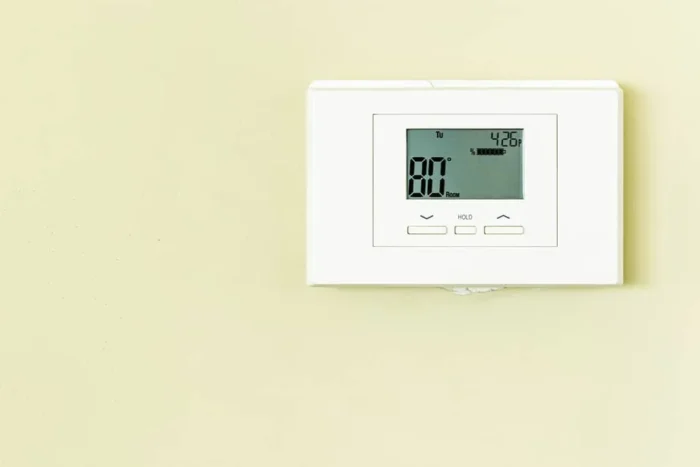
In your heating systems you will see a button and many homeowners get confused about this. What is emergency heat on the thermostat and when to use this? This system is beneficial for those who rely on heat pumps and this function is useful in situations like low temperature and malfunctioning of the system. With complete knowledge about this you can save money on repairs, high energy bills and enjoy comfort even in freezing temperatures. In this blog MileHi HVAC explains to you what emergency heat means, how to use it, when you need it and safety tips for using this.
What does emergency heat mean?
The first thing to know about emergency heat is that it is the backup option found on thermostats connected to heat pumps. Heat pumps work in a way that they extract heat from outside and keep indoor temperature warm but sometimes when there is low temperature heat pump is unable to work properly. So in this situation you can manually switch to backup heat using Emergency heat mode. This is the secondary heating source like electric resistance heaters,gas furnaces, oil furnaces for your comfort.
How Does EM Heat Work?
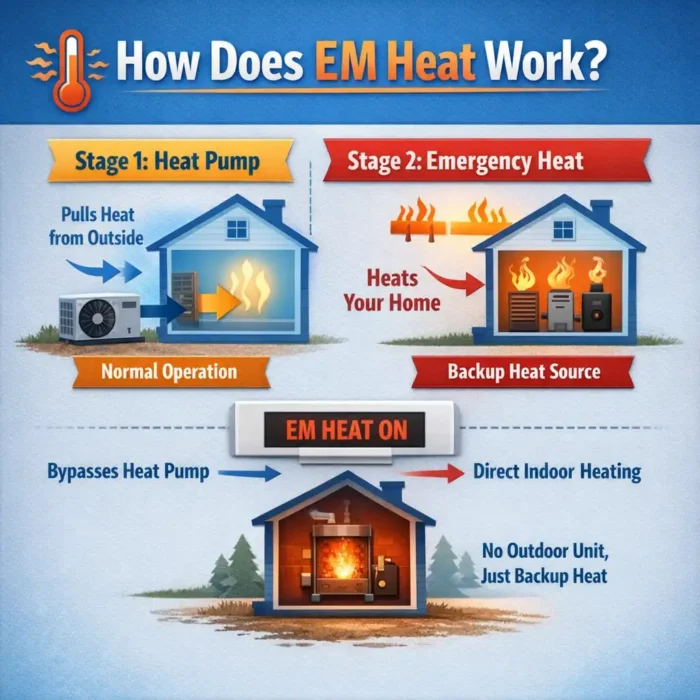
Most heat pump systems have two heating stages. The heat pump is stage one. It pulls warm air from outside and moves it into your home. This works great when it is not too cold outside.
Emergency heat is stage two. It is a backup heating source built directly into your system. Depending on your home, it runs on electric resistance coils, a gas furnace, or an oil boiler.
When you manually turn on em heat on thermostat, your system completely bypasses the heat pump. It stops using the outdoor unit and runs only on the backup source. This means your home gets heat directly, without relying on outside air at all. The backup source kicks in and heats your home on its own. No outdoor unit involved. Just straight, direct heat indoors.
You may read What Is the Blue Wire on a Thermostat?
Why it is costly
Emergency heat is more expensive than other systems because in this case we rely on electric heating elements,furnaces instead of heat pumps. As compared to heat pumps and other systems electric heating sources use high power which results in higher energy bills.
That is why it is recommended to utilize the heating system emergency mode when necessary. It must be used in emergencies and be avoided using it on a daily basis.
When Should I Use EM Heat?
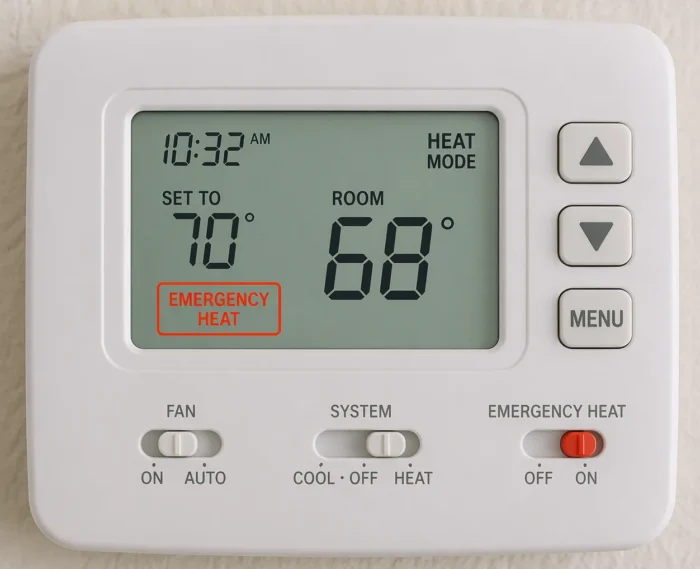
This is one of the most common questions homeowners have, and the answer is simple. Only use emergency heat when your heat pump is broken or damaged and cannot run at all.
Here are the right situations to switch it on:
Your heat pump is making loud, unusual noises and stops working. Ice has built up heavily on the outdoor unit and the defrost cycle is not clearing it. A storm or fallen branch has physically damaged the outdoor unit. A technician has confirmed the heat pump needs repair.
In these cases, switching to em heat on thermostat keeps your home warm while you wait for a repair. It is a temporary fix, not a permanent heating solution.
When You Should NOT Use It
Many homeowners make the mistake of turning on emergency heat just because it is cold outside. That is the wrong move. Your heat pump is designed to handle cold weather. Most modern heat pumps work efficiently down to 0°F or even lower.
Do not use emergency heat if your heat pump is still running normally. Do not use it to warm your home faster. Do not leave it on for days or weeks. Every extra day costs you more money on your energy bill.
One Sign You May Need a Professional
If your system keeps switching to emergency heat on its own, that is a red flag. It usually means the heat pump has a fault. Contact an HVAC technician right away. At MileHi HVAC, our Denver heater maintenance service team checks your full system to find the root cause fast.
Emergency heat vs auxiliary heat
There is too much confusion among people related to these systems emergency heat and auxiliary heat. The main difference between them is:
- Auxiliary Heat turns on automatically when the heat pump needs extra help.
- Emergency Heat is manually activated by you using your thermostat.
Both systems perform backup heating functions but emergency mode overrides the heat pump.This refers to thermostat heat over ride. This feature can be useful in emergencies; it should not be used for longer periods. So it is important to understand the heating system emergency mode.
Signs for emergency heat
When you notice following signs then it means you have to activate the emergency heat:
- System is delivering cold air
- Problems in outdoor unit
- Ice buildup in outdoor coil
- Breaker is tripping frequently by the heat pump
- You notice some loud and buzzing noises
In these situations emergency heat protects your system from further issues before professionals come and see the situation. Contact MileHi HVAC in these emergencies our team will provide professional services.
At What Temperature Outside Should I Turn My Heat On?
There is no single magic number, but here is a practical guide most HVAC professionals agree on.
For your heat pump, turn it on when outdoor temperatures drop below 65°F. Most people start feeling cool indoors around this point, and the heat pump runs efficiently in these conditions.
What About Really Cold Days?
Modern heat pumps handle cold weather well. Most run efficiently down to around 25°F to 35°F. Below that range, efficiency drops, but the system still works. Your heat pump will work harder, but it should keep running.
You do not need to switch to emergency heat just because temperatures are low. Your thermostat will automatically call for more heat from the heat pump. Trust the system.
When Outside Temperature Actually Matters for EM Heat
If temperatures fall extremely low, say below 0°F, and your heat pump is struggling to keep your home at the set temperature, that is when a professional should assess your system. It does not automatically mean you need emergency heat. It may mean your heat pump needs a tune-up or your home needs better insulation.
If you live in the Denver area and notice your home is not staying warm on cold nights, MileHi HVAC’s Denver heater maintenance service can inspect your system before winter gets worse.
Simple Temperature Guide
Above 35°F: Heat pump runs efficiently with no issues. Between 15°F and 35°F: Heat pump works but works harder. Below 15°F: Monitor your system, call a pro if heating is inadequate. Heat pump not working at any temperature: Switch to em heat on thermostat and call for repair immediately.
MileHi HVAC professional assistance
In winter seasons if you are rapidly switching towards emergency heat and your heat pump is struggling to keep temperature. It’s important that you call professionals for help before it’s too late. Our certified team at MileHi HVAC provides professional inspection, replacements and replacement services for several components. We always ensure that your system works efficiently even in harsh conditions and your peace should be maintained.
Final Thoughts
Understanding what is emergency heat on the thermostat helps homeowners use their system wisely and avoid higher energy bills. Emergency heat is only helpful in extreme cold weather as a backup when your heat pump can’t operate properly. With features like heat pump backup heating, heating system emergency mode, and thermostat heat override, you can protect your comfort and your budget. If you notice your system switching to emergency heat often, it may be time to get professional HVAC services in Denver. MileHi HVAC is here to diagnose issues fast and keep your home efficient and safe. Contact MileHi HVAC today for expert support and reliable comfort!
FAQS
What exactly does emergency heat do?
Emergency heat acts as a backup option for the heat pump. It activates the heat pump backup heating system and keeps your house temperature warm even in cold weather.
Is it okay to use emergency heat all night?
Yes you can use it if your heat pump is not working properly. Using it all the night may lead to a rise in energy bills.
How do I know if my system is in emergency mode?
You can see it on your thermostat which displays emergency heat or E heat which means that system is shifted to backup heating.
Should I repair or replace my heat pump if emergency heat turns on often?
If you are using emergency heat frequently it is a sign that your heat pump is struggling. Contact professionals like MileHi HVAC which will diagnose the issues immediately.
Does emergency heat warm the house faster?
No its only function is it only provides backup heating it does not fasten that heating process.