


What Happens to a Water Heater When the Water Supply Is Off?
Think of your water heater like a tea kettle; it’s designed to have liquid inside whenever the heat is on. If you shut off your main water valve, the tank stays full briefly, but that is a dangerous trap. If someone in the house opens a hot water tap or a toilet refills, gravity pulls water out of that tank. Since the main supply is off, no fresh water enters to replace it.
This leaves your heating elements or gas burners firing into an empty or half-empty space. These parts are built to transfer heat directly into water. Without that water to soak up the energy, the internals get red-hot fast. This can snap electric elements, crack the tank’s protective lining, or fry the safety sensors meant to keep the unit stable.
The danger usually strikes when you least expect it. You might turn the water off for a quick repair, but if you forget to flip the breaker, the heater keeps trying to do its job. If even a small amount of water is drawn, you’ve exposed the top element to open air while it’s still glowing hot.
Why Running a Water Heater Without Water Is Dangerous
If you run a water heater dry, you are essentially asking for a replacement bill. Water isn’t just what you’re heating; it’s the cooling system for the tank itself. It keeps the metal from reaching temperatures that the structure wasn’t built to handle. If you’ve ever wondered, can i turn off water and leave water heater on, the risk of burning out your heating elements in an empty tank is simply too high.
In an electric heater, running the unit while the tank is empty can melt the top element in about 30 to 60 seconds. It’s that fast. For gas heaters, the burner at the bottom will bake the floor of the tank, ruining the glass lining that prevents rust and warping the steel. Once that lining cracks, your tank is on a fast track to leaking and a trip to the junkyard.
People also ask me, should you turn off water during power outage events? Generally, you don’t need to—but if you choose to shut the water off for safety, you must shut off the power or gas as well. I’ve seen homeowners lose a perfectly good heater in under five minutes because they killed the water supply but forgot the breaker. The damage happens almost instantly; once those elements or the tank lining are gone, there’s no fixing it—you’re looking at a full replacement.
When You Should Turn Off Your Water Heater
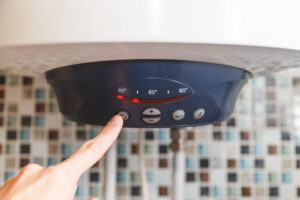
Handling Main Water Supply Shutdowns
Whether the city is digging up pipes down the street or you’re doing some serious plumbing work yourself, you have to decide what to do with that tank. Here is the real-world rule of thumb:
- For Quick Fixes (Under 4 Hours): If you know the tank is full before the water stops, you’re usually fine to leave it alone. That water acts like a heat shield for the internal parts, so the unit stays protected.
- For Long Hauls (Over 4 Hours): It’s better to be safe than sorry—flip it off. Go to your breaker for electric units or turn the gas valve down. This is the only way to be 100% sure you won’t deal with “dry-firing” damage.
- If You’re Draining the Tank: Never, ever start draining until the power or gas is dead. Once it’s safe, hook up a hose to the drain valve. This clears out the gunk and keeps the heater safe if you’re leaving it empty for a while.
Dealing with Unexpected Leaks
If you see a puddle forming at the base of your heater, you need to move fast. Don’t waste time trying to find the crack while the unit is still firing away.
- Step One: Kill the power immediately. For electric setups, flip that breaker. For gas, turn that supply valve to “OFF.” You want that heating process stopped right now.
- Step Two: Cut off the water. Look for the cold water shutoff valve near the top—this is your hot water heater turn off valve. Crank it clockwise until it’s tight. This keeps your floor from becoming a swimming pool.
- Step Three: Get the water out. If you can do it safely, use a garden hose to drain the tank away from your house and any electrical outlets.
Even a tiny drip is a red flag. It’s usually a sign that rust or a failing seal is about to turn into a much bigger (and wetter) problem.
Leaving for Vacation or Long Trips
When you’re heading out for a while, you start thinking about your energy bill and safety. Deciding on turning off electric water heater when not in use is a smart move for your wallet.
- Weekend Getaways: Just leave it. The energy it saves isn’t worth the wear and tear of constantly cycling the system on and off.
- A Week or Two Away: Look for “Vacation Mode” on your dial. It keeps the water around 50 degrees—warm enough to prevent freezing, but cool enough to shave 30–40% off your heating costs.
- Gone for a Month+: Shut it down completely. Turn off the water, kill the power, and drain the tank.
A lot of people skip the draining part, but standing water can get pretty nasty with bacteria. Starting fresh when you get home is much healthier for your family.
During Home Maintenance or Repairs
Anytime you’re messing with your pipes, it’s just good practice to shut off a gas water heater or electric model. It makes your workspace safer and keeps the equipment from firing when it shouldn’t.
Whether you’re swapping a kitchen faucet or fixing a bathroom pipe, you’ll probably have the main water off. Pro plumbers always kill the heater first—if you’re doing it yourself, you should follow that same lead to avoid a “dry fire” disaster.
What Happens During Power Outages?
If the electricity goes out, your electric heater just goes to sleep. You don’t have to lift a finger; it’ll stay safe and wait for the grid to come back.
Gas heaters are different because they don’t always need a plug to work. People often ask me, if my gas is shut off will i have hot water? Honestly, the answer is no. If the gas is cut, the flame dies, and your hot water disappears. If the power is out but the gas is still on, your heater might keep running, but it’s worth checking your manual—some newer models have sensors that need a bit of juice to stay safe.
You may read Water Heater Working But No Hot Water?
Step-by-Step: What to Do When Water Is Turned Off
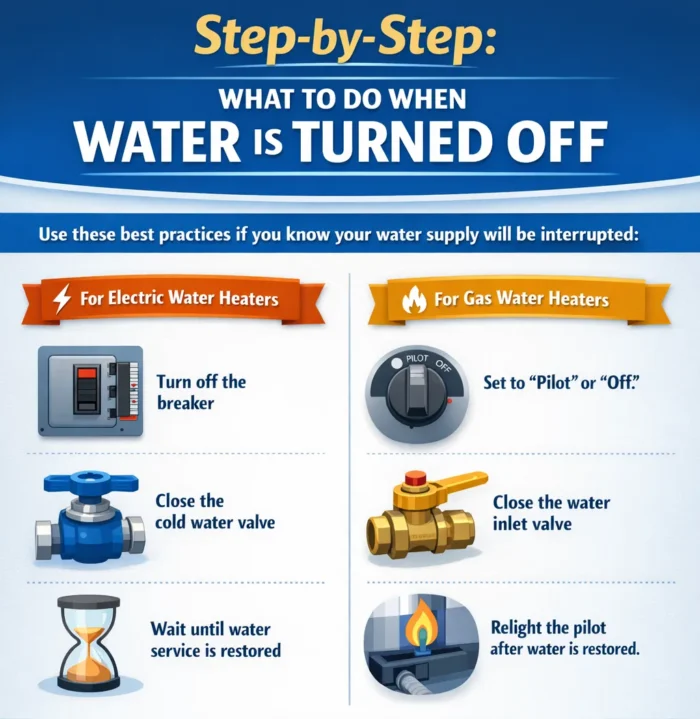
Use these best practices if you are aware that your water supply will be interrupted:
- Regarding Electric Water Heaters
- Switch off the electrical panel’s breaker.
- Close the valve that supplies cold water.
- Hold off until water service is restored.
- Regarding Gas Water Heaters
- Set the gas control to “pilot” or “off.”
- Close the water inlet valve.
- After the water flow is restored, relight the pilot.
To avoid needless harm, experts at MileHi HVAC frequently advise taking these actions.
Understanding Should You Turn Off Water Heater When Water Is Off?
The short and safest answer is yes. Honestly, don’t even overthink this one—shutting off the heater is the only way to be 100% sure you won’t ruin it. Think of it as a mandatory safety step rather than just “good advice.” It’s the difference between a minor plumbing annoyance and a massive bill for a brand-new appliance.
When you turn the heater off, you’re basically putting it in “park.” It stops the unit from trying to heat up air or a half-empty tank. This protects you from the nightmare of burnt-out heating elements, melted internal parts, or a tank that cracks under the pressure of localized heat. It’s also a huge safety win—especially for electric models where a “dry” element can become a serious fire risk. If the city shuts off your water or you’re doing a DIY repair that requires draining the lines, just flip the breaker. That five-second task can save you thousands.
Practical Tips for Water Heater Safety
I always tell people that a little bit of “homeowner homework” goes a long way. If you ignore your water heater, it’ll eventually ignore your request for a hot shower. Here’s what I’ve found actually makes a difference:
- The Annual Flush: Once a year, hook up a garden hose to the drain valve and let a few gallons out. You’ll see “gunk” or sediment that looks like sand. Getting that out helps the heater run quieter and last years longer.
- Find the “Goldilocks” Temp: Set your thermostat to 120°F. It’s the perfect middle ground—hot enough to keep the water sanitary, but not so hot that it scales your skin or wastes a fortune on your electric bill.
- Test the T&P Valve: This is that little lever on the side or top. Give it a quick pull once a year; you should hear a “whoosh” of water. If it’s stuck, it’s a red flag. That valve is what keeps your tank from over-pressurizing.
- Check the Anode Rod: This is the “guardian” of your tank. It’s a metal rod that rusts so your tank won’t. If you pull it out every three years and it looks like a skeleton, it’s time for a new one.
Milehi Hvac recommends professional inspections every two years. Our technicians catch small issues before they become expensive repairs. Gas Water heater installation in Denver includes a comprehensive maintenance schedule tailored to your specific model.
How to Safely Turn Off Different Types of Water Heaters
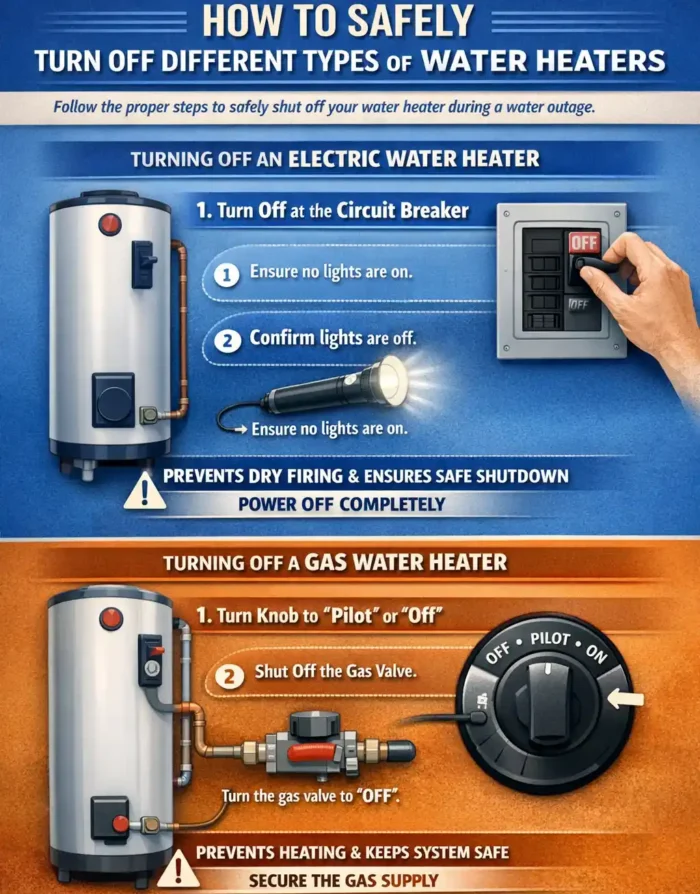
All water heater types have their own unique shut-off procedures. Doing things the right way will be safe and will not cause you any damage.
Turning Off an Electric Water Heater
Electric water heaters should be turned off at the breaker, not at the thermostat. Doing so completely powers off the heating elements, ensuring they do not turn on.
Make sure that none of the lights are on after you turn off the breaker. It also fully powers down the system and makes it safe to use during the water outage.
Electric units are prone to dry firing, so this step is essential whenever the water supply is cut off.
Turning Off a Gas Water Heater
Gas water heaters are switched to “pilot” or “off,” according to the model. This prevents the burner from heating the tank while keeping safety controls in place.
The shutdown of the gas valve is an additional safeguard for prolonged outages. The heater may be lit again according to the manufacturer’s directions following restoration of the water service.
Read More: Water Heater Sediment Symptoms.
Gas vs. Electric Water Heaters: Key Differences in Outage Safety
The danger zone isn’t the same for every home because electric and gas units react to empty pipes in very different ways. Here is the lowdown on what you’re actually protecting when the water stops flowing:
- Electric Heaters (The High-Risk Category): These are definitely the most sensitive. Inside the tank, you have metal heating elements that stay cool only because they are submerged in water. If that water level drops and leaves an element high and dry while the power is on, it will literally burn itself out in less than a minute. It’s that fast. My best advice? Don’t risk it—just flip that breaker.
- Gas Heaters (The Metal Fatigue Risk): A gas burner is a bit tougher since it doesn’t have an element to snap, but it can still ruin your day. If the burner keeps firing against the bottom of a dry tank, it essentially bakes the steel. This weakens the metal and creates tiny fractures that eventually turn into a flooded basement. If the water is only going to be off for an hour or two, a total pro-move is turning your dial to the Pilot setting. This keeps the pilot light going so you don’t have to struggle with matches later, but it stops the main burner from turning the tank into an oven.
The Bottom Line: If you’re looking at a water outage that’s going to last more than four hours, stick to the Safety First rule. Cut the power for electric or switch to Pilot/Off for gas. Taking ten seconds to do this can easily save you from a $1,500 replacement bill and a whole lot of stress.
What to Do When Water Service Is Restored
When water begins to flow again, resist the temptation to turn the heater back on right away. First, make sure the tank has been completely refilled to prevent dry firing.
Open a hot water tap and let the air out until a steady stream comes out. This ensures the tank is full and no air is trapped. Then you can restore the power or gas to the unit.
A bit more time at this step really helps to protect the heating elements and gets the system back online safely.

Water Heater Safety During Vacations or Long Absences
Longer periods of drought introduce comparable hazards to water outages. Many people shut off their main water valve before traveling as a precaution against leaks.
So in that regard, you need to decide if you should drain water heater before vacation or wait. Draining might also help for long trips, especially in cold weather or with an old system.
At the very least, turning off the water heater prevents the waste of energy and will take care of the problem if the tank happens to drain while no one is home to find out about it.
Common Mistakes Homeowners Make During Water Shutoffs
One common error is assuming that a full tank means the water heater can be left on. Normal use in the household can deplete the water levels rapidly, even if more than one tap is open. Yet another error is turning the heater back on too soon after water restoration. Even with the tank fully refilled, internal components may have been exposed to air, which can cause damage. Finally, other people just forget to turn the heater off altogether. Eating, should you turn off water heater when water is off, in the form of a question in advance, will save you from this very expensive mistake.
Long-Term Damage Caused by Ignoring Water Heater Shutdowns
Dry heating conditions being repeated over time also cause the internal components to degrade. Even if it does not fail immediately, the life of the heater can be substantially shortened.
Sediment accumulation, element warping, and tank wall corrosion cause energy efficiency to decline and energy costs to rise. These are two of several common issues that you may not realize you have until your unit dies on you.
Good water turn-off practices during stoppages in the water supply are a small daily discipline that ensures the performance and reliability of the system.
Signs Your Water Heater Was Damaged
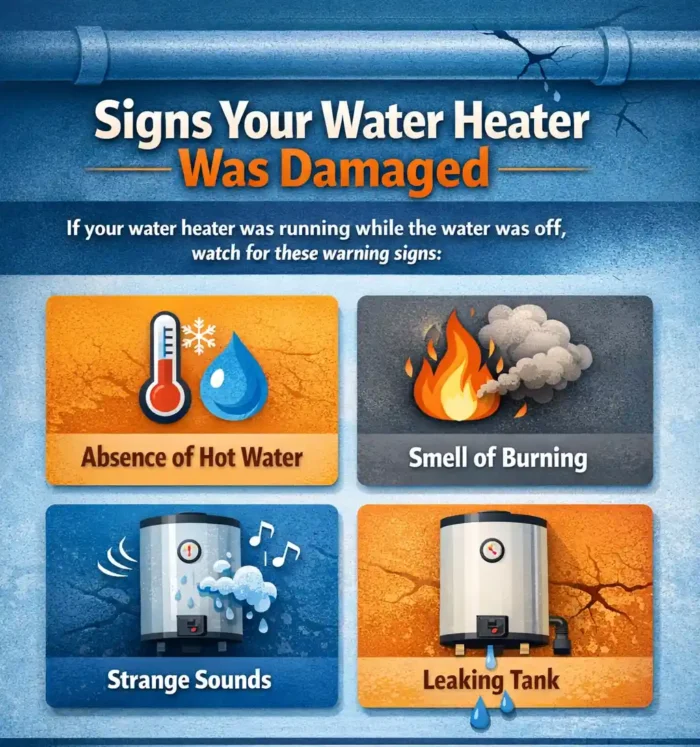
Keep an eye out for warning indicators if your water heater remained running while the water was off:
- Absence of hot water
- The smell of burning
- Strange sounds
- The tank’s leak
Get in touch with MileHi HVAC right away for an inspection and repair if you see any of these.
Conclusion
Analyzing Should You Turn Off Water Heater When Water Is Off is part of responsible home maintenance. Shutting the unit off during water interruptions helps prevent overheating, minimizes safety hazards, and prolongs the life of your appliance.
For an hour or for days, a simple step safeguards your investment and spares you the hassle of repairs. If you’re not sure, it’s always safer to turn it off.
When you need professional help with water heater issues, Milehi Hvac provides expert water heater installation in Denver and comprehensive maintenance services. Contact us for reliable solutions you can trust.
FAQs
Can a water heater be ruined in a brief water outage?
Yes, a water heater can be damaged during a brief water outage—especially if it continues running without water, which can cause overheating. Electric heaters are more at risk, as exposed heating elements can burn out quickly without water inside the tank.
Is there a need to switch off the water heater if only the cold water is disrupted?
Yes, he still needs incoming cold water to keep his tank filled to the safe levels.
Should I shut off my tankless water heater during water outages?
Most tankless units are equipped with safety sensors, but it is still best to turn the unit off in the event of an extended power outage.
Is it Ok to leave a water heater on overnight during a water shut-off?
No, you have a greater risk of the water use emptying the tank and causing boiling in an overnight outage.
How do I know when I can turn my water heater back on?
When the flow of water has been re-established and the air has been removed from hot water lines, you can safely turn the water heater back on.
Does turning off the water heater conserve energy?
Yes, it’s the best way to prevent wasting electricity when you’re not home or during power outages.
Do renters have to worry about water heater shutdowns?
Yes, renters should contact their landlord or follow their property guidelines for the keeping of appliances to avoid damage.