

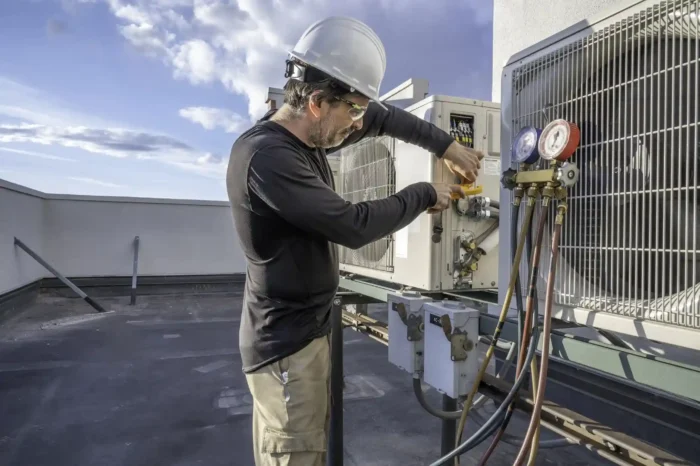
At MileHi HVAC, we specialize in installing, maintaining, and repairing advanced commercial heating, cooling, and ventilation systems. In this guide, we’ll break down exactly how a commercial HVAC system works, walk you through key components like rooftop HVAC units, commercial ventilation systems, and industrial HVAC systems, and show you how proper operation directly impacts your building’s performance and long-term costs.
What Is a Commercial HVAC System?
A commercial HVAC system is a large-scale heating, ventilation, and air conditioning system designed specifically for non-residential buildings. Unlike home systems that serve a single living space, commercial systems are engineered to manage multiple zones, floors, and departments — all within one building.
Understanding how does commercial HVAC work starts with one simple reality: these systems must regulate temperature, control humidity, circulate fresh air, and remove airborne contaminants all at the same time, every single day, without interruption.
How Does a Commercial HVAC System Work Step with the aid of using Step?
At its core, a commercial HVAC system follows the same basic principles as a residential system — just on a much larger and more sophisticated scale.
Here’s how the process works in plain terms. The system first draws air in from inside the building. That air passes through filters to remove dust and contaminants, then gets heated or cooled based on your thermostat settings. Once it reaches the right temperature, it travels through ductwork and gets delivered to different zones or areas throughout the building. At the same time, stale indoor air is pushed out and replaced with fresh outdoor air through the commercial ventilation system.
This cycle runs continuously — keeping temperatures consistent, airflow balanced, and indoor air quality healthy across your entire facility.
The Role of Rooftop HVAC Units

One of the most widely used components in commercial buildings is rooftop HVAC units. These self-contained systems sit directly on the roof, which frees up valuable indoor space while still efficiently serving large areas of the building.
What makes rooftop units so practical is that they combine heating, cooling, and ventilation into a single packaged system. They pull in outdoor air, condition it, and push it through ductwork to every part of the building. Since they’re installed outside, they keep noise levels low indoors and make it much easier for technicians to perform routine maintenance without disrupting daily operations.
At MileHi HVAC, rooftop HVAC units are one of our most recommended solutions for offices, retail stores, schools, and restaurants — and for good reason. They’re reliable, accessible, and built to perform.
Types of Commercial HVAC Systems
Not every commercial HVAC system is designed the same way. The right choice depends on your building size, layout, and how the space is used.
Single-Split Systems are a straightforward and affordable option for smaller spaces like individual offices or retail shops. One outdoor unit connects to one indoor unit — simple and effective.
Multi-Split Systems take that concept further by connecting multiple indoor units to a single outdoor unit. This works well in buildings where rooftop or exterior space is limited.
VRF/VRV Systems (Variable Refrigerant Flow) are among the most advanced options on the market. They deliver precise temperature control to multiple zones at the same time, making them ideal for large office buildings and hotels.
Rooftop HVAC Units remain the most popular choice for mid-to-large commercial buildings. Everything — heating, cooling, and ventilation — is packaged into one rooftop unit that’s easy to maintain and out of the way.
Chilled Water Systems are designed for very large facilities. Rather than using refrigerant directly, they circulate chilled water to cool the air — providing powerful, consistent performance across massive spaces.
Industrial HVAC vs. Commercial HVAC: Is There a Difference?
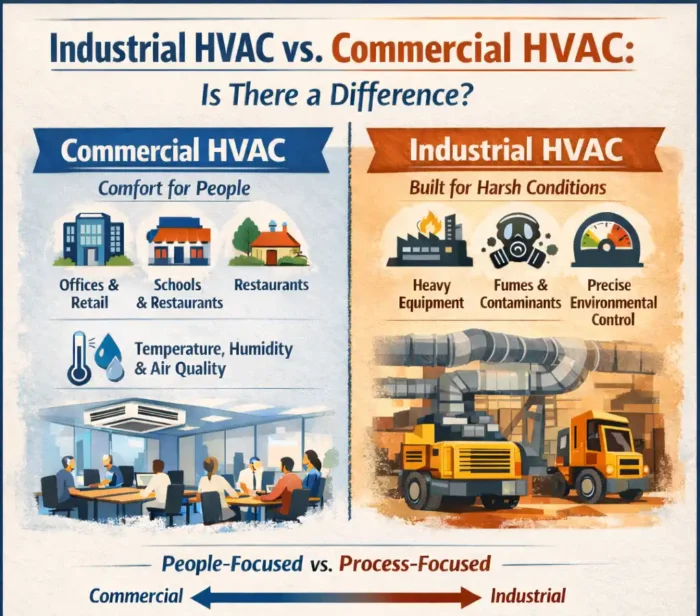
Yes — and it’s a meaningful one. Both systems handle heating, ventilation, and cooling, but they’re built for very different environments.
Commercial HVAC systems are focused on keeping people comfortable. They manage temperature, humidity, and air quality in offices, retail stores, schools, and restaurants where occupant experience is the top priority.
Industrial HVAC systems are built for much harsher conditions. They handle extreme heat from heavy equipment, filter out hazardous fumes and particles, and maintain the precise environmental conditions that manufacturing and production processes require. In these settings, safety and operational precision come before comfort.
The simple way to think about it — if your building is for people, you need a commercial system. If your building runs heavy industrial processes, you need an industrial-grade solution. At MileHi HVAC, we design and install both, tailored exactly to what your facility demands.
Read More: How Long Do Commercial HVAC Systems Last?
Commercial Ventilation Systems and Indoor Air Quality
One thing that truly separates commercial HVAC systems from residential ones is how critical ventilation really is. Commercial ventilation systems do more than just move air around — they maintain proper air exchange, filter out pollutants, and ensure your building meets local health and safety codes.
Fresh outdoor air comes in while stale indoor air gets pushed out. This constant exchange keeps humidity in check, reduces airborne contaminants, and helps your team stay comfortable and focused throughout the day. In spaces like hospitals, gyms, and manufacturing facilities, good ventilation isn’t just about comfort — it’s a legal and safety requirement.
On top of that, a properly working ventilation system takes pressure off your commercial cooling system by preventing heat buildup and stopping moisture problems before they start.
Why Commercial HVAC Systems Are a Smart Investment
A quality commercial HVAC system is more than just a building expense — it’s a long-term investment that pays off in multiple ways.
Lower Energy Bills come from modern systems with smart controls and variable-speed technology that use far less energy than older equipment.
Better Employee Productivity is a real benefit. Uncomfortable temperatures and poor air quality genuinely hurt workplace focus and performance. A properly working system keeps your team at their best.
Fewer Emergency Repairs happen when you invest in quality equipment and stay on top of maintenance. Avoiding one major system failure can save you thousands of dollars and days of downtime.
Higher Property Value is another win. Buildings with efficient, modern HVAC systems are simply more attractive to tenants and buyers.
At MileHi HVAC, we help you find the right system for your building and your budget — so you get the best possible return from day one.
Industrial HVAC Systems Explained
Industrial HVAC systems are a different beast entirely. Built for factories, warehouses, and large manufacturing plants, these systems go well beyond keeping people comfortable. They manage intense heat from heavy machinery, control dangerous fumes and dust, and maintain very specific temperature and humidity levels that production processes depend on.
A typical industrial system includes powerful exhaust fans, heavy-duty filtration, and advanced control systems designed to run non-stop under demanding conditions. Because these systems are so complex, professional design and installation aren’t just recommended — they’re absolutely necessary.
MileHi HVAC has hands-on experience designing and installing industrial HVAC systems that meet strict safety standards, perform under pressure, and hold up for the long haul.
Zoning and Controls in Commercial HVAC Systems
A big part of understanding how does a commercial HVAC system work is understanding zoning. Zoning lets you heat or cool different areas of your building independently, based on what each space actually needs. The south-facing offices might need heavy cooling on a hot afternoon, while the interior conference rooms stay comfortable with far less.
Smart thermostats and building automation systems handle all of this automatically — adjusting airflow and temperature zone by zone without any manual effort. This keeps everyone in the building more comfortable while cutting down on wasted energy. Facility managers also get real-time visibility into system performance, making it much easier to spot and address issues before they escalate.
Energy Efficiency and Commercial Cooling System Working
Energy efficiency isn’t just a buzzword — it has a direct impact on how much you spend every single month. A well-optimized commercial cooling system reduces operating costs, extends equipment life, and keeps your building running smoothly without unnecessary strain on the system.
Modern components like high-efficiency compressors, variable-speed fans, and intelligent control systems all contribute to better performance with less energy. But even the best equipment loses efficiency without proper upkeep. Dirty filters, clogged coils, and failing sensors quietly force your system to work overtime — which shows up fast on your energy bill.
At MileHi HVAC, we help businesses stay efficient through preventive maintenance plans and smart system upgrades designed around your building’s specific needs.
Why Commercial HVAC Maintenance Matters
Knowing how does a commercial HVAC system work is only half the picture. The other half is understanding why keeping it maintained is so important.
Regular inspections keep every part of the system — rooftop units, ventilation components, thermostats, and controls — working exactly as it should. When maintenance gets skipped, small issues don’t stay small for long. They turn into breakdowns, poor air quality, uncomfortable temperatures, and energy bills that keep climbing.
Scheduled service is simply the smartest way to protect your investment, avoid emergency repair costs, and make sure your building never misses a beat.
You may read How Much Does HVAC Repair Cost?
Common Problems in Commercial HVAC Systems
Even a well-built commercial HVAC system will run into issues eventually. The most common ones include airflow imbalance, sensor malfunctions, refrigerant leaks, and blocked ventilation. In industrial environments, dust accumulation and machine heat can push industrial HVAC systems harder than they’re designed to handle.
The key is catching problems early. A minor issue spotted during a routine service visit can save you from a full system failure that costs significantly more to fix — and causes far more disruption to your operations.
Conclusion
Understanding how Commercial HVAC services in Denver work helps building owners make smarter decisions about comfort, energy efficiency, and long-term operating costs. From rooftop HVAC units to advanced commercial ventilation and industrial HVAC systems, every component plays a vital role in maintaining a healthy indoor environment.
With expert design, proper installation, and routine maintenance, commercial HVAC systems deliver reliable performance year after year. Choose MileHi HVAC for trusted Commercial HVAC services in Denver—contact our team today to get started.
Frequently Asked Questions (FAQs)
How does a commercial HVAC system work in another way from a residential one?
Commercial structures are larger, extra complex, and designed for a couple of zones, better occupancy, and non-stop operation.
Are rooftop HVAC units dependable for business buildings?
Yes. Rooftop HVAC gadgets are extensively used because of their efficiency, space-saving design, and simplicity of preservation.
What position do business air flow structures play?
They adjust airflow, dispose of pollutants, manipulate humidity, and preserve healthful indoor air quality.
Do commercial HVAC structures require unique preservation?
Yes. Industrial HVAC structures require specialised preservation because of heavy utilization and precise environmental demands.
Can MileHi HVAC provider commercial HVAC structures?
Absolutely. MileHi HVAC presents professional installation, preservation, and restore for business and commercial HVAC structures.