

Running out of hot water while you’re in the middle of a shower is genuinely annoying. Tank-based water heaters store a fixed amount of hot water, and when that runs out, you’re stuck waiting. Tankless water heaters take a completely different approach — they heat water right as you need it, with no storage tank involved at all.
This guide walks you through how does a tankless water heater work, explained in a way that actually makes sense. By the end, you’ll know exactly how these units operate, what makes them worth considering, and whether one belongs in your home. Modern water heating has come a long way, and it might be time your daily routine reflected that.
What’s a Tankless Water Heater?
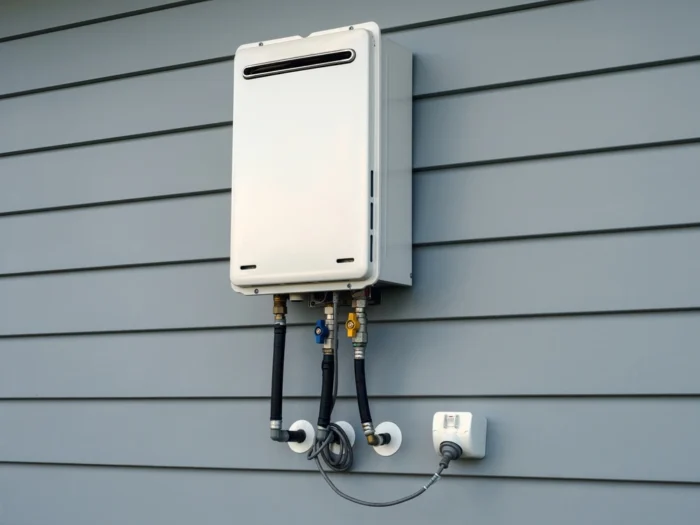
A tankless water heater is a small, wall-mounted unit that heats water the moment it starts flowing through the system. Traditional heaters store somewhere between 40 and 50 gallons of hot water at all times. Tankless models skip that entirely — water only gets heated when you actually need it, whether that’s for a shower, the dishwasher, or anything else.
You might also hear them called on-demand or instantaneous water heaters. They hang on walls, so they don’t eat up floor space. Size-wise, most units are roughly comparable to a small suitcase, making them a practical choice for homes where every square foot counts.
Old-school tank heaters run nonstop to keep stored water hot, which burns energy even when nobody’s home. Tankless systems don’t turn on unless there’s actual demand. That difference alone is why they tend to be cheaper to run over the long haul.
Understanding How Does a Tankless Water Heater Work
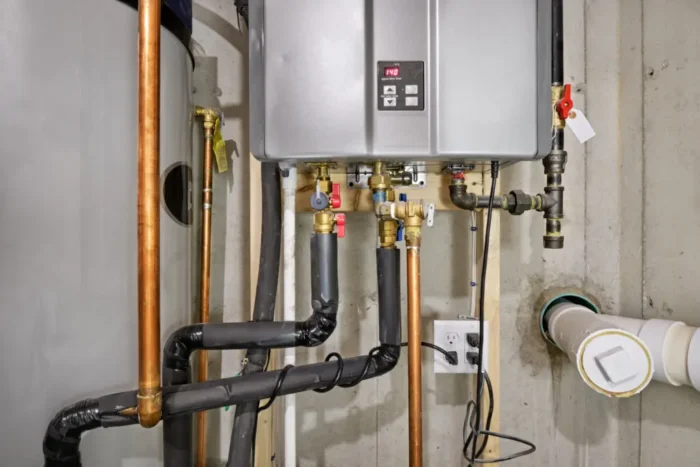
The actual mechanism behind a tankless water heater isn’t complicated. Turn on a hot water tap, and cold water starts moving through a pipe into the unit. A flow sensor notices that movement and signals the system to begin heating. That’s really where it all starts.
Here’s the step-by-step process:
Step 1: Water Flow Detection As soon as you turn on the hot water, the flow sensor wakes up. It reads the flow rate, which typically falls somewhere between 0.5 and 5 gallons per minute. From there, the system works out how much heat is required based on the temperature of the incoming water and whatever output temperature you’ve dialed in.
Step 2: Heating Activation Here’s where the two main types go in different directions. If you’ve ever wondered how does a tankless gas water heater work, it fires up a burner that heats a heat exchanger. For those curious about how does an electric tankless water heater work, those models switch on high-powered heating coils that transfer heat straight into the passing water.
Step 3: Temperature Control A built-in digital panel keeps everything in check. It tracks the temperature of incoming water and constantly adjusts the heating output to hold your chosen temperature steady. Most units support settings anywhere from 100°F up to 140°F.
Step 4: Instant Hot Water Delivery Water moves through the heat exchanger or past the heating elements, picking up heat along the way. Within a matter of seconds, water at your chosen temperature is already coming out of the tap.
Step 5: Automatic Shutdown The second you turn the tap off, the flow sensor catches it. Heating stops immediately, and the unit goes quiet in standby mode. There’s no energy being burned to keep water hot that nobody’s using.
At the center of every tankless system is the heat exchanger. Gas models use coils made from copper or stainless steel, with cold water winding through them while flames do the heating underneath. Electric versions rely on high-wattage elements positioned right in the water’s path.
Today’s tankless units also come loaded with safety features — freeze protection, overheat shutdown, flame failure detection. These aren’t just nice extras; they’re what make these systems genuinely dependable for everyday home use.
You may read How to Flush a Tankless Water Heater?
Is Tankless Water Heater Gas or Electric
There are two types of tankless water heaters on the market: gas and electric. They work differently, cost differently, and suit different kinds of homes.
Gas Tankless Water Heaters To understand how does a tankless gas water heater work, start with the fuel. These units burn natural gas or propane to fire a burner, which heats water as it passes through. They pack serious power, typically producing between 150,000 and 200,000 BTUs. That output level makes them well-suited to bigger homes where multiple bathrooms are running at once.
Because they burn fuel, gas units need a venting system to expel combustion byproducts — either through an exterior wall or up through the roof. That requirement drives up installation costs. But in areas where natural gas is cheap, the lower monthly bills usually make that initial investment worthwhile.
Electric Tankless Water Heaters Understanding how does an electric tankless water heater work is pretty straightforward — instead of a flame, these units use powerful electrical heating elements to warm water directly as it flows through. No venting required, which keeps installation cleaner and less expensive.
They’re a natural fit for apartments, smaller homes, or situations where you just need hot water at one specific spot. A compact electric unit installed under a kitchen sink, for example, gives you instant hot water right there without waiting for it to travel from a central heater.
The catch is electrical demand. Whole-home electric tankless units typically need 150 to 200 amps of service. Plenty of older homes are only wired for 100 amps, which means a panel upgrade might be on the table. Running costs come down to what electricity costs in your area.
Which Type Is Better? There’s no single right answer. Gas handles high-demand households better and delivers stronger flow rates. Electric works well where gas isn’t available or where usage is lighter. Look at what’s already in your home, how much hot water your household burns through, and what you’re paying for energy locally.
Milehi HVAC helps homeowners in the Denver area make this call with confidence. We take a close look at your setup before recommending anything during consultation for tankless water heater installation near Denver.
Advantages of Tankless Water Heaters
Switching over to a tankless system isn’t just about having newer equipment. The day-to-day differences are real.
Endless Hot Water Supply A tank heater has a hard limit. Once the stored water is gone, you wait. A tankless system doesn’t have that ceiling — water keeps getting heated as long as demand stays within the unit’s rated capacity. Two people showering while the dishwasher runs? Not a problem.
Energy Efficiency and Lower Bills For households using 41 gallons or less per day, tankless heaters run 24% to 34% more efficiently than tank models. Even heavier users at around 86 gallons per day still see gains of 8% to 14%. The reason is simple: heating only happens when there’s actual demand.
Tank heaters bleed energy constantly, reheating stored water as it naturally cools. That standby loss disappears with a tankless system. For a typical household, that works out to somewhere between $100 and $200 saved each year.
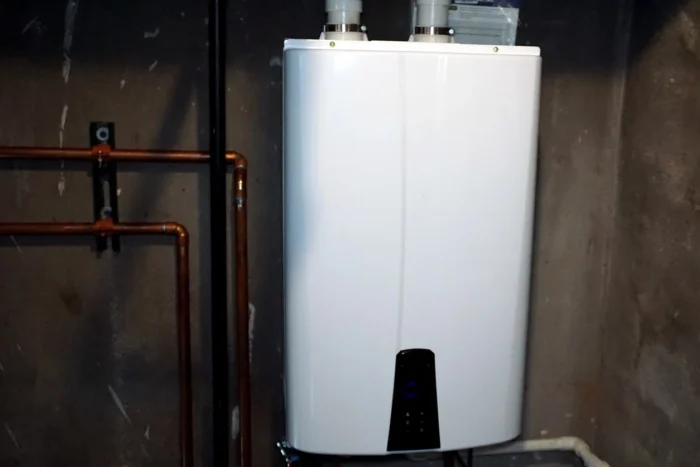
Space Savings A standard tankless unit runs about 28 inches tall, 20 inches wide, and 10 inches deep. A 50-gallon tank heater needs a 60-by-24-inch section of floor. That’s a meaningful difference, especially in smaller utility rooms, basements, or closets.
Longer Lifespan Tank heaters average somewhere between 10 and 13 years. A well-maintained tankless unit can go 20 years or beyond. That’s fewer replacements over the time you own your home, which helps offset the higher upfront cost.
Reduced Risk of Water Damage A tank heater that fails can dump 50 gallons of water into your home in a hurry. Since tankless systems hold no stored water, that scenario doesn’t exist. It’s one less thing to worry about as the unit ages.
Better Water Quality Water that sits in a tank for extended periods can pick up rust, sediment, or even bacteria. With a tankless system, every drop you use is heated fresh on demand. That tends to translate to better tasting, cleaner hot water.
Precise Temperature Control Set your temperature digitally and the system holds it there consistently. No more standing at the sink adjusting the handle trying to find the right mix. Some models even let you schedule different temperature settings throughout the day.
Environmental Benefits Using less energy means putting less strain on the grid and shrinking your carbon footprint. The longer product lifespan also means fewer units getting thrown out over the years. Most tankless models are built with recyclable materials, too.
Milehi HVAC specializes in helping Denver homeowners realize these benefits. Our tankless water heater installation near Denver service includes professional sizing, expert installation, and ongoing support to ensure optimal performance.
Choosing the Best Water Heater for Your Home
Getting the right unit means looking honestly at how your household actually uses hot water.
Assess Your Hot Water Demand Think about the busiest stretch of your day. How many things are pulling hot water at once? A shower runs about 2.5 gallons per minute. A dishwasher uses 1 to 2. A washing machine needs 2 to 3. Add up what’s realistically running at the same time.
If two showers and a dishwasher could overlap, you’re looking at needing 6 to 7 gallons per minute minimum. Whatever unit you choose should be rated to handle that flow at your target temperature.
Consider Temperature Rise Requirements Temperature rise is the difference between your incoming groundwater temperature and your desired hot water temperature. Denver groundwater typically comes in around 50°F to 55°F. Wanting 120°F output means you need a rise of 65°F to 70°F.
This matters because tankless units perform differently depending on how big that rise is. A unit rated for 8 gallons per minute at a 35°F rise might only manage 4 gallons per minute at 70°F. Always verify specs against your real-world conditions.
Evaluate Installation Requirements Look at what you’re working with before picking a unit. Gas models need a gas line with enough capacity and a viable venting route. Electric models need adequate amperage and possibly a panel upgrade.
Location matters too. A unit installed closer to the fixtures you use most means less time waiting for hot water to arrive. But venting paths and utility hookups can limit where things can actually go. A professional eye helps sort that out quickly.
Compare Operating Costs The purchase price is just part of the picture. Gas models often carry higher installation costs but lower monthly bills where natural gas is inexpensive. Electric models are cheaper to install but can cost more to run depending on local rates.
Energy factor ratings give you a standardized way to compare efficiency across models. Most manufacturers also publish estimated annual operating costs, which makes side-by-side comparisons straightforward.
Plan for Proper Sizing An oversized unit costs more than it needs to and wastes capacity. An undersized one leaves you frustrated every time demand peaks. Proper sizing factors in:
- Number of bathrooms and fixtures
- Household size and hot water usage patterns
- Simultaneous usage scenarios
- Climate and incoming water temperature
- Future needs if household size might change
Maintenance Considerations Annual maintenance keeps a tankless unit running efficiently and extends its life. Flushing the system to clear mineral deposits is the main task, and it’s particularly important in hard water areas. Denver’s water is moderately hard, so skipping this isn’t really an option.
Some manufacturers tie warranty coverage to professional maintenance, so read those terms before assuming DIY service is fine. Set aside budget for yearly service visits.
Warranty and Support Heat exchanger warranties typically run 10 to 15 years. Other components may be covered for less. Extended coverage is usually available at extra cost if you want more protection.
Local service availability matters more than people realize. A brand with no nearby support network can leave you stranded if something goes wrong. Milehi HVAC works with established manufacturers and stays available for service well after the installation is done.
Point-of-Use vs. Whole-Home A whole-home unit handles every fixture in the house from one central location. Point-of-use units are smaller and serve just one area. They make a lot of sense for:
- Bathrooms far from the main unit
- Kitchen sinks where wait times get old fast
- Adding capacity to an existing system in high-demand spots
Some homeowners run both — a central whole-home unit backed up by point-of-use units in specific locations. That combination tends to deliver the best balance of performance and efficiency.
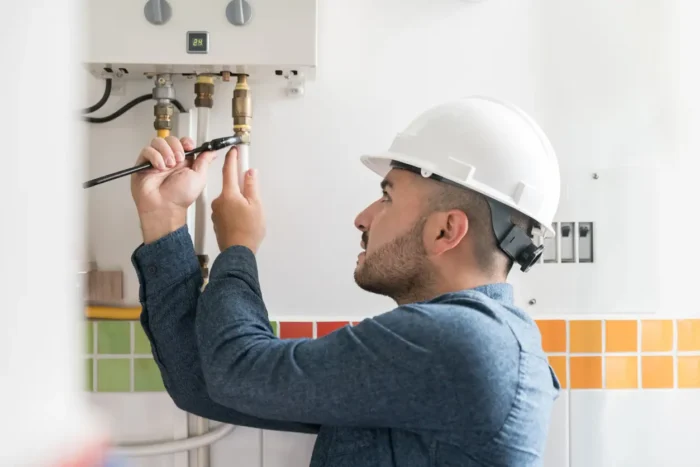
Professional Installation Matters A tankless water heater is only as good as its installation. Gas units involve venting and gas line work that has to be done right. Electric units need proper wiring and circuit protection. Bad installation can void your warranty, create safety risks, or just result in a system that never quite performs the way it should.
That’s why working with someone experienced makes such a difference. Milehi HVAC has handled tankless water heater installation near Denver for years. We take care of permits, installation, and testing — so when we leave, you know the system is dialed in and ready to go.
Conclusion
Understanding how does a tankless water heater work helps you make informed decisions about your home’s water heating. These efficient systems provide endless hot water while reducing energy costs and saving space. Whether you choose gas or electric depends on your home’s infrastructure and needs. Ready to upgrade your water heating system? Contact Milehi HVAC today for expert tankless water heater installation near Denver and experience the benefits of modern, efficient water heating.
FAQs
How long do tankless water heaters last?
Tankless water heaters typically last 20 years or more with proper maintenance. This is nearly double the lifespan of traditional tank heaters, which last 10 to 13 years. Regular annual maintenance, including system flushing, helps achieve maximum lifespan.
Can a tankless water heater supply enough hot water for a large family?
Yes, but proper sizing is essential. Large families need units with higher flow rates or multiple units. A professional assessment determines the right capacity for your household. Some homes install two smaller units rather than one large unit for better coverage.
Are tankless water heaters worth the higher upfront cost?
For most homeowners, yes. The energy savings, longer lifespan, and reduced maintenance costs offset the higher initial investment. Typical payback period is 5 to 10 years. After that, you continue saving money on energy bills while enjoying reliable hot water.
Do tankless water heaters work in cold climates?
Yes, but cold incoming water temperatures require more powerful units. In Denver’s climate, you need a unit sized for the local groundwater temperature. Models with freeze protection features prevent damage during winter. Professional installation ensures proper operation in cold weather.
How often should I maintain my tankless water heater?
Annual maintenance is recommended for optimal performance. In areas with hard water like Denver, more frequent flushing may be necessary. Regular maintenance prevents mineral buildup, maintains efficiency, and extends the unit’s lifespan. Many manufacturers require annual professional service to keep warranties valid.