

One of the most important investments is upgrading your home’s hot water system and understanding how to install a gas water heater helps you in making informed decisions. Knowing about all the processes and steps is essential for ensuring safety and long term performance whether it’s replacing an old unit or planning a new water heater installation.
A hot water heater has a typical lifespan of 10-15 years which supplies hot water for daily activities like bathing, cleaning and cooking. Sometimes it fails unexpectedly when its lifespan is completed and you run out of hot water. That’s why understanding about gas water heater installation is essential. So in this guide from MileHi HVAC you will learn about everything system step by step installation and maintenance tips.
Understanding about gas water heater
Before diving into how to install a gas water heater it is best to first understand about the working of the system. So gas water heaters generally come in two types: tank style and tankless systems. Tank style units are the most common option which heats and stores hot water for daily household chores.
Key components of gas water heaters include:
- A small gas burner which heats the water inside the tank
- A thermostat which maintains and controls the overall temperature
- A pressure relief valve for safety
- Cold water inlet and hot water outlet pipes
- A venting system that controls the combustion gases
That’s why hot water heater installation becomes easier by understanding about these elements and helps you trouble shoot issues in future.
Needed tools and materials
One thing to keep in mind is to gather and collect all the required tools and materials before installing a gas water heater process for ensuring a smooth workflow.
The main components you need are a typical pipe wrench and adjustable wrench for tightening connections. Screwdrivers are needed for securing fittings. For pipe connections flexible water connectors are needed and for safe gas supply gas line fittings are necessary. Also depending upon the system setup vent pipes may be needed and for old tank draining buckets is also necessary.
Having everything ready is the smartest decision which delays during water heater installation.
Choosing the right water heater
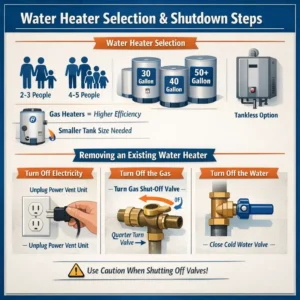
One of the most critical steps is selecting the correct unit in how to install a gas water heater. The size and type of heater depend upon the household size and water usage.
As compared to electric models gas water heaters have higher heating capacity. So large size homes, bathrooms or large families require a larger tank. Some modern gas water heaters heats water quickly which allows homeowners to use smaller performance and saves budget.
When you are planning about gas water heater installation consider these factors like recovery rate, energy efficiency and available space. Choosing the right system for your home ensures consistent hot water and reduced energy bills.
Removing an Existing Water Heater
Before draining the heater, our first step is usually to disconnect the unit from its energy source.
How to Turn Off the Electricity
Standard vent water heaters perform with a mechanical manipulate valve, so there may be no power to be involved with. Power-vented heater plug right into a preferred 115V receptacle, so it`s as easy as unplugging it to soundly de-energize the unit.
How to Turn Off the Gas
If the gas piping become nicely installed, you need to have a gas close-off valve inside some ft of the appliance. These are generally quarter-flip valves. If the valve manage is parallel to the pipe, gas is permitted to glide through, if perpendicular, the gad is close off.
If you notice that the valve frame and manage are each manufactured from brass, or if the manage is rectangular or a raised square shape, use a small adjustable wrench and slowly flip the valve to the off position. Sometimes those antique brass valves are difficult to transport and without problems break. Using a small wrench, and no longer a BIG one, will maintain you from making use of an excessive amount of pressure to the valve and connecting piping.
How to Turn Off the Water
Be simply as cautious whilst turning off the water. There need to be a valve at the cold water line, serving handiest the heater, and there need to NOT be one on the new side. If the bloodless chill water valve turns on and off without problems, and it absolutely stops the water, maintain it. If now no longer, update it. If there may be a valve on the new side, you`re going to eliminate it and store the brass for scrap.
Read More: Does a Gas Water Heater Need Electricity?
Steps For Installing a Gas Water Heater
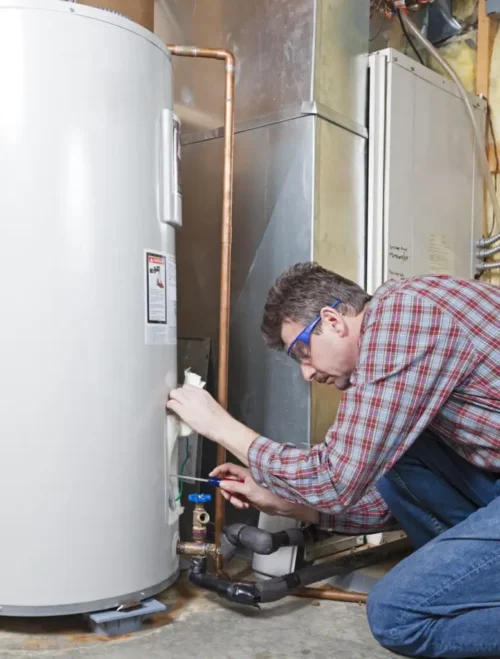
Now here are the main steps of how to install a gas water heater.
Position and Level the Unit
The first step is placing the new water heater in a drain pan for preventing potential water damage. Make sure that unit is level and positioned in a well ventilated area with proper spacing for easy maintenance.
Connect Water Lines
Install the heat trap fittings and connect cold and hot water lines using suitable appropriators. For avoiding any leakages secure all the joints tightly during the water heater installation.
Install the Pressure Relief Valve
Attach the pressure relief valve and connect a discharge pipe that safely directs the water away from the unit. This is one of the most critical safety features in gas water heater installation.
Connect the Gas Supply
Using approved fittings carefully connect all the gas lines with heaters. Make sure that all the connections should be secure. If you have any confusion related to the system then it is recommended to consult professionals to install a gas water heater.
Fill the Tank and Check for Leaks
After a complete safe setup turn on the water supply and let the tank to completely fill. After that open the hot water tap to remove the trapped air form system. For complete safety inspect all the connections for leaks.
Test Gas Connections
Turn on the gas supply and apply soap solution to all the joints. If you notice any bubbles then it means that there is some issue like leakage which needs immediate action.
Ignite the Pilot Light
At the end follow the manufacturers instructions to ignite the pilot light. Once the burner is on, adjust the thermostat according to your desired temperature.
So if you follow all these steps then it ensures a successful hot water heater installation.
Some maintenance tips
After you install a gas water heater through proper maintenance you can extend the lifespan of the system and its efficiency and performance.
- Annual flushing removes all the sediment buildup inside the tank which affects the heating efficiency.
- Checking the pressure relief valve ensures that it functions properly.
- Inspecting the vent system prevents any blockages and improves the overall safety.
Examining the most important component anode rod periodically protects the tank from corrosion. If there is any issue replacing it also extends the heater’s life. Overall routine maintenance is essential after gas water heater installation.
Professional installation benefits
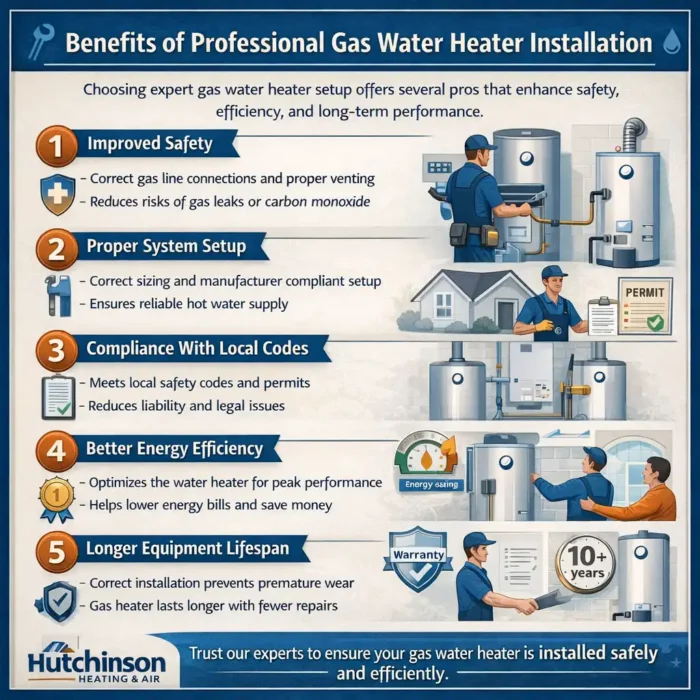
When you are exploring how to install a gas water heater another factor professional installation matters a lot which gives better results.
Safety
Safety is one of the most important concerns. Gas connections and ventilation systems require precision for avoiding any hazards like gas leaks. Experts make sure that system is properly installed.
System setup
From sizing the unit to optimizing efficiency, trained technicians handle every detail of water heater installation. Our experts at MileHi HVAC guarantee a proper system setup.
Legal requirements
Another key benefit is their compliance with local codes and regulations. As improper installation leads to fines and safety risks. That’s why professional installers make sure to meet all the legal requirements.
Improved energy efficiency
When gas water heater installation is handled by professionals energy efficiency is improved and leads towards system optimal performance. This reduces energy consumption and lowers the utility bills. For all the professional and reliable services contact our team at MileHi HVAC.
Final thoughts
Homeowners can safely manage their own systems by learning how to install a gas water heater. Whether replacing an old unit or installing a new one, proper guidance ensures a safe, efficient setup. For peace of mind, trust MileHi HVAC for professional gas water heater installation near Denver. Our expert team guarantees your water heater works effectively for years to come. Don’t risk leaks or safety issues—let our certified technicians handle it. Contact MileHi HVAC today to schedule your gas water heater installation and enjoy reliable hot water!

Frequently Asked Questions
Can I install fueloline water heater myself?
While a few house owners strive DIY projects, gas water heater installation is complicated and includes fueloline traces and venting. Professional set up is normally endorsed for protection.
How long does gas hot water heater set up take?
A normal gas hot water heater installation takes approximately to 4 hours relying at the complexity and whether or not an vintage unit need to be removed.
Do I want a allow for water heater set up?
In maximum areas, water heater installation calls for lets in and need to comply with nearby plumbing and fueloline codes to make sure protection and compliance.
What equipment are had to set up gas water heater systems?
Common equipment consist of pipe wrenches, adjustable wrenches, screwdrivers, protection glasses, and plumbing fittings used at some stage in gas water heater set up.
Should I get a new gas hot water heater of the same size?
In general, you should match the tank capacity to your home’s needs but even smaller modern heaters might be more efficient.