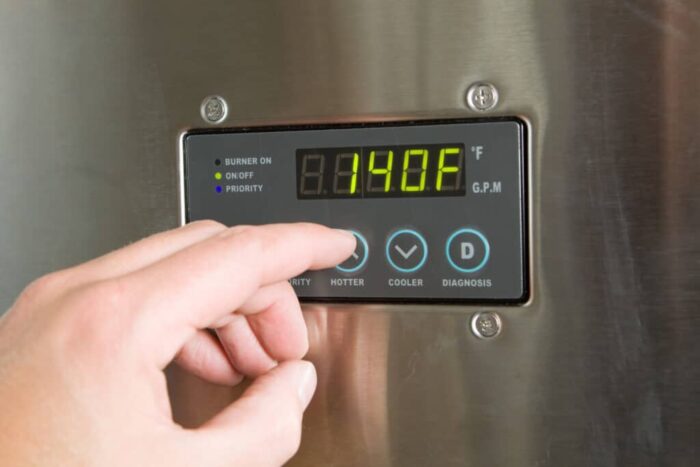
If you want your water heater system to run effectively and deliver water according to your needs then knowing about how to adjust water heater temperature is essential for you. If you are facing issues like too much hot water or other fluctuations then only adjusting water heater temperature will bring a significant difference.
At MileHi HVAC we help homeowners in making their system work properly without any safety hazards. In this professional guide we will discuss everything that you should know and how you can adjust the temperature of your water heater without any safety hazard or damage.
So let’s start diving into it.
Why it matters
It is common that people don’t look after their heaters or properly schedule their maintenance. They only notice when something goes wrong.Incorrect temperature setting is a serious issue and it leads to several problems.
- Sudden increase in energy bills due to overheating.
- If temperature is too low it results in bacterial growth
- Scalding risk for children and elder family members
- Reduces the lifespan of water heater
What is the Ideal water heater temperature?
The ideal water heater temperature setting for most homes is 120F. If your heater is set to this temperature it will deliver normal water for cleaning and bathing and reduces the risk of burn and energy waste.
120 F is the ideal temperature but it also depends upon many homes who have large families and require more usage of water. So for these households the ideal temperature is almost 130F.
Different types of water heaters
The first thing you should know when you adjust the water heater temperature is about what type of system. The main two types are:
Gas water heaters
Gas water heaters have a dial located at the bottom of the tank. From that dial you can adjust the temperature. This dial serves as a water heater temperature control. It displays labels like Warm, Hot or labels.
Electric water heaters
Electric water heaters use internal thermostat which are behind the access panels. Advanced electric units have both upper and lower thermostat that must be set for better performance.
You may read How Long Does A Water Heater Last?
Step by step guide for adjusting water heater temperature
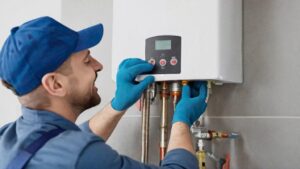
Following these steps you can easily understand how to adjust water heater temperature without any damage to your system.
Turn off the power
For doing any adjustment or maintenance safety should be the first priority. For the electric heater turn off the breaker and for the gas valve turn it to pilot position.
Locate the temperature adjustment
For temperature adjustment find the thermostat or dial. In the case of a gas water heater it is usually the water heater knob setting. For electric heaters remove the access panel and adjust temperature through the thermostat.
Make small adjustments
At start carefully make the small adjustments. Turning the dial slightly small changes allow the system to work in a stabilized state without overheating or underperforming.
Restore power
After making small adjustments, turn the power on and wait for 2 to 3 hours. Carefully test the temperature using a thermometer for ensuring safety.
Mistakes to avoid
By improperly adjusting their heaters many homeowners unintentionally cause issues. Steer clear of these typical errors:
- Raising the temperature too much
- Not turning off the power before making an adjustment
- Overly violently turning the water heater knob setting
- Disregarding the advice of the manufacturer
Professional help from MileHi HVAC can help you avoid expensive repairs and safety hazards if you’re unsure.
Cost saving and energy efficiency
Energy efficiency is significantly impacted by effective temperature control. Water heating expenses can be lowered by 3–5% by simply lowering the temperature by 10 degrees. Mineral accumulation and heating element stress can be decreased by optimizing the water heater temperature control.
Homeowners that adjust water heater temperature frequently encounter:
- Decreased use of energy
- More reliable delivery of hot water
- Extended lifespan of equipment
- Regular temperature checks are a wise long-term investment because of these advantages.
Professional assistance from MileHi HVAC
If changing the temperature doesn’t resolve the problem, there can be more serious issues like:
- Thermostats that are broken
- accumulation of sediment in the tank
- Heating components that are aging
- Problems with the gas valve
Contacting MileHi HVAC in these circumstances guarantees that your system will be examined, calibrated and securely returned to peak function.
Final thoughts
One easy yet effective way to boost efficiency, safety, and comfort is learning how to adjust water heater temperature correctly. With proper settings and routine care, your system can deliver reliable performance for years. Our Denver heater maintenance service helps prevent unexpected issues while improving overall efficiency. Whether you need expert adjustments or a professional inspection, MileHi HVAC provides dependable solutions you can trust. Contact us today to schedule your water heater and heater maintenance service and keep your Denver home running smoothly.
FAQS
What is the water heater’s safest temperature?
For most houses 120°F is the safest temperature since it lowers the risk of scorching without sacrificing comfort.
After modifying, how long does it take to notice changes?
Changes in temperature should become apparent three to four hours after the modification.
Can I reduce my energy costs by changing the temperature?
Indeed, keeping the proper setting lowers monthly utility expenses and energy use.
Why is my water still too hot or too cold?
Persistent problems could be a sign of an old water heater, silt accumulation or thermostat failure.
Should I change the temperature according to the season?
Seasonal changes are typically not necessary. All year long, modern systems continue to operate steadily.