
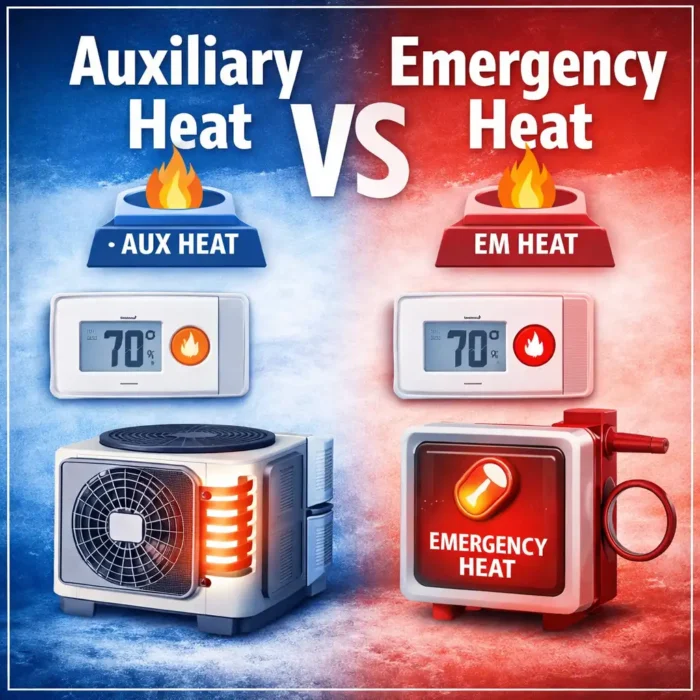
Homeowners notice some unfamiliar indicators on the thermostat such as auxiliary heat and emergency heat. Understanding about auxiliary heat vs emergency heat is essential for homeowners for maintaining comfort, improving efficiency and reducing higher utility bills. These two types of heat systems are found in heat pumps but they have different functions.
In this professional guide from Milehi HVAC we will learn about how these systems work, when they activate and how to use them correctly.
What is auxiliary heat?
Auxiliary heat is often labelled as AUX; it is basically a secondary heat source that assists heat pump when the outdoor temperature becomes worse. Although heat pumps are more efficient, in freezing weather their performance decreases. At this time the auxiliary heat automatically activates and helps the heat pump in maintaining the desired temperature.
This function explains the common comparison of heat vs auxiliary heat while standard heat mode relies on heat pump auxiliary heat only provides additional warmth when needed.
Auxiliary heat operates using electric resistance coils and gas furnaces as the backup source. Resistance heating also consumes more electricity so frequent running of AUX results in an increase of energy bills.
Key Features of Auxiliary Heat
- It activates automatically when the heat pump is unable to operate.
- Helps in maintaining consistent indoor temperature
- It uses more energy as compared to heat pump
- It is used commonly during the extreme cold weather
When homeowners notice this setting they often ask about emergency heat vs auxiliary heat difference.
What is emergency heat?
Emergency heat is a manual thermostat setting that completely bypasses the heat pump and runs only as a backup heating system. This mode is useful in case when the heat pump is malfunctioning, undergoing repairs and frozen.Likewise auxiliary heat emergency heat does not turn on automatically it has to switch on manually.
This leads to another comparison of aux heat vs em heat. Auxiliary heat automatically supports the system but emergency heat replaces it completely.
Key Features of Emergency Heat
- It is manually activated by the homeowners
- It is used when heat pump is frozen or damaged
- Runs as the backup heating system
- It has higher energy consumption
Understanding about this aux vs backup heat relationship is crucial because emergency heat fully relies on the backup heating source.
Auxiliary Heat vs Emergency Heat: Main Differences
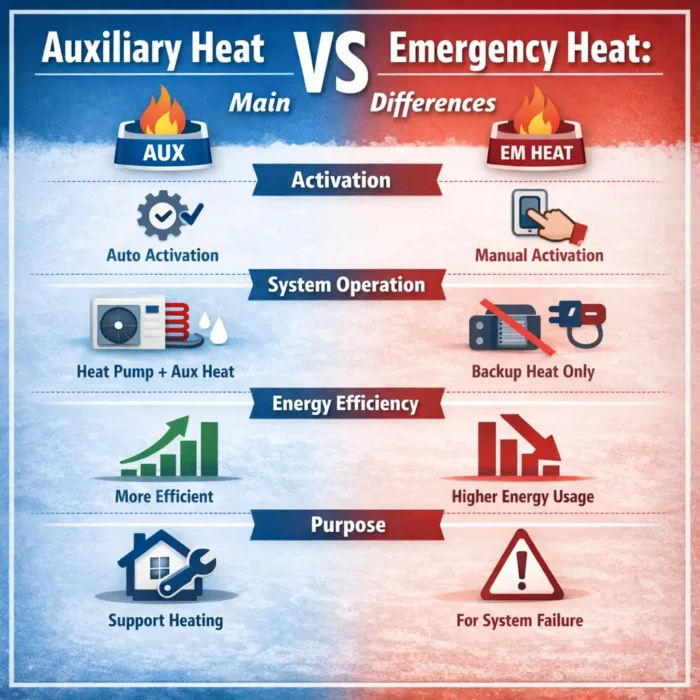
Here is a simple comparison of auxiliary heat vs emergency heat.
Activation method
Auxiliary heat turns on automatically when needed while emergency heat has to be turned on manually.
This difference is important when evaluating heat vs auxiliary heat. Auxiliary heat is a built-in support feather rather than a separate operating mode.
System Operation
In AUX mode the heat pump continues to operate along with the backup heating mode. In case of em mode the heat pump does not operate and completely shuts off.
This is also a key factor in understanding emergency heat vs aux heat difference .
Energy Efficiency
Auxiliary heat is less efficient than a heat pump because it is a secondary backup heating source but more efficient than the emergency mode as it consumes more energy.
That’s why experts at MileHi HVAC often recommend homeowners to avoid unnecessary reliance on aux heat vs em heat.
Purpose
Auxiliary heat operates as a support to heating operations but emergency heat operates in case of system failure.
When Should Auxiliary Heat Turn On?
Auxiliary heat typically activates when:
- Outdoor temperature falls below freezing
- Indoor temperature drops quickly
- The setting of thermostat raised significantly
- The heat pump enters defrost mode
If homeowners frequently notice about AUX heat running they wonder about heat vs auxiliary heat efficiency. It is normal in most cases especially during the extreme cold weather but its frequent running is a sign of some system issues or poor insulation.
When Should You Use Emergency Heat?
Emergency heat is commonly used in specific situations like:
- When heat pump is not working
- Outdoor unit is completely frozen or damaged
- Your system is making unusual noises
- You are waiting for some HVAC repairs.
It is observed that many homeowners confuse the emergency heat vs aux heat difference which uses emergency heat for faster warming. This often leads to significant higher utility bills.
Energy Costs | Auxiliary Heat vs Emergency Heat
From the cost perspective understanding about auxiliary heat vs emergency heat can save a lot of money.
- Only heat pump is the most effective option
- Auxiliary heat is moderately expensive
- Emergency heat is most expensive
This hierarchy explains why aux heat vs em heat should be managed carefully.emergency heat bypasses the efficient heat pump and relies heavily on higher energy backup heating systems.
Tips to Reduce Auxiliary and Emergency Heat Usage
Here are some practical and simple tips for you from our experts at Milehi HVAC.
Maintain Your Heat Pump
Regular servicing and maintenance ensures efficient operation and reduces dependency on auxiliary heat.
Improve Home Insulation
When you maintain proper insulation this maintains the indoor temperature and minimizes the need for heat vs auxiliary heat comparisons in extreme weather.
Use Smart Thermostat Settings
Avoid raising the temperature settings frequently as this triggers the AUX heat.
Schedule Timely Repairs
If your system fails suddenly then temporarily rely on emergency heat. Understanding about emergency heat vs aux heat difference will prevent long term higher costs.

Final thoughts
Understanding about auxiliary heat vs emergency heat helps homeowners in making smarter decisions related to comfort, efficiency and energy costs. Auxiliary heat is a backup heating feature that turns on automatically when needed while emergency heat is a manual setup used in case of system failures.
By knowing about the differences between heat vs auxiliary heat and recognizing the emergency heat vs aux heat difference you can ensure efficient winter heating.
If you are unsure and have any confusion contact professionals at MileHi HVAC will help you with expert imperfections, maintenance and energy saving solutions.
FAQS
What is the main difference in auxiliary heat vs emergency heat?
Auxiliary heat works automatically with a heat pump while emergency heat is manually activated and operates only the backup heating system.
Is heat vs auxiliary heat operation normal in winter?
Yes, auxiliary heat commonly turns on during extreme cold winters and helps in maintaining the comfort.
What is the emergency heat vs aux heat difference in energy usage?
Emergency heat uses more energy as it bypasses the heat pump completely.
Should I switch to aux heat vs em heat for faster heating?
No, these methods can be used only when the heat pump is not functioning properly.
How does aux heat vs backup heat affect my electricity bill?
Backup heating systems consume more energy as compared to normal heat pumps. That’s why their long term usage increases the cost.
When should I call Mile Hi HVAC?
If your AUX operates frequently and you depend more on emergency heat then contact MileHi HVAC for professional evaluation.