


Understanding oil furnace replacement cost helps you in planning your budget as replacing an oil furnace is a major home investment. If you notice some symptoms like inefficiency, longer lifespan and breaking down so if you have knowledge about the cost and info related to oil furnace replacement it saves your money and time. Our professional team at MileHi HVAC guides homeowners in making the right decision, a beneficial long term investment without any stress or confusion.
Average oil furnace replacement cost
The oil furnace replacement cost typically ranges from $4000 to $10,000 like from moderate to higher prices. These price ranges also depend upon various factors like home size,installation complexity and furnace efficiency. The total cost of furnace replacement includes labor cost, equipment, removal of old system and duct or vent modifications.A professional replacement is about $2500 to $6000. Homes which have a more professional setup like upgrading or duct modification then expenses raise to almost $10,000.
Although this investment is very costly, new modern furnaces are more environment friendly, efficient and have less fuel usage. So a modern replacement is a smart long term investment as compared to traditional and old models.
Breakdown of oil furnace replacement costs

The Furnace Unit
The equipment itself currently runs $2,800 to $8,200. Why such a gap? Brand and efficiency. You have premium names like Lennox and Carrier—they’re the “luxury” tier with proprietary parts. Then you have Trane and Rheem in that “sweet spot” of reliability versus price.
High-efficiency units (90-97% AFUE) are the smart play now. While they cost roughly 20% more than standard units (80% AFUE), I’ve seen homeowners save $400–$600 per year on fuel. In a world where oil prices are unpredictable, that efficiency is your only real hedge.
Professional Installation
Labor in 2026 averages $1,800 to $3,200. This isn’t just “plug and play.” A tech has to calculate your home’s actual heat load (Manual J), wire the high-voltage connections, and calibrate the oil burner.
Most qualified techs charge $90 to $175 per hour. A clean install takes a full 8-to-10-hour day. If a “handyman” offers to do it for $600, run. I’ve spent more time fixing “DIY” oil line leaks and soot-choked burners than I have doing fresh installs.
Old Furnace Removal
Expect to pay $300 to $750 for disposal. Old oil furnaces are heavy, cast-iron beasts often coated in sludge. If your unit is a massive 150,000 BTU dinosaur from the 80s, the labor to break it down and haul it out of a narrow basement stairs adds up.
Permits and Inspections
Municipal permits now range from $75 to $400. Don’t skip this. A permit triggers a third-party safety inspection. If your house has an unpermitted furnace and you try to sell it—or worse, have a fire—your insurance company will likely walk away from the claim.
Additional Components
Rarely is it just the furnace.
- Smart Thermostats: $150–$500 (standard for 2026 energy management).
- Ductwork Repair: $600–$2,500 if your old vents can’t handle the airflow of a modern blower.
- Oil Supply Lines: $400–$900 if your old copper lines are corroding or don’t meet current environmental codes.
Factors That Influence Oil Furnace Prices
Efficiency (AFUE Rating)
High-efficiency furnaces use secondary heat exchangers to squeeze every drop of energy from your oil. They cost more upfront, but with the 2026 “Green Energy” tax credits still active, you can often recoup the price difference in just two seasons.
Quality and Brand
You’re paying for the heat exchanger warranty and part availability. “Value” brands might save you $1,000 today, but if a part fails in February and takes two weeks to ship, that $1,000 savings disappears into space heater costs and frozen pipes.
Installation Complexity
Every house is a different puzzle. If we have to reline your chimney or move the unit to a different wall, the price climbs. Seasonal demand also plays a role—if you wait until the first frost, you’ll pay a “peak season” premium. For the best rates and expert service, contact MileHi HVAC; we specialize in sizing systems that actually fit your budget and your home’s footprint.
You may read How Often To Change Furnace Filter?
Importance of oil furnace replacement
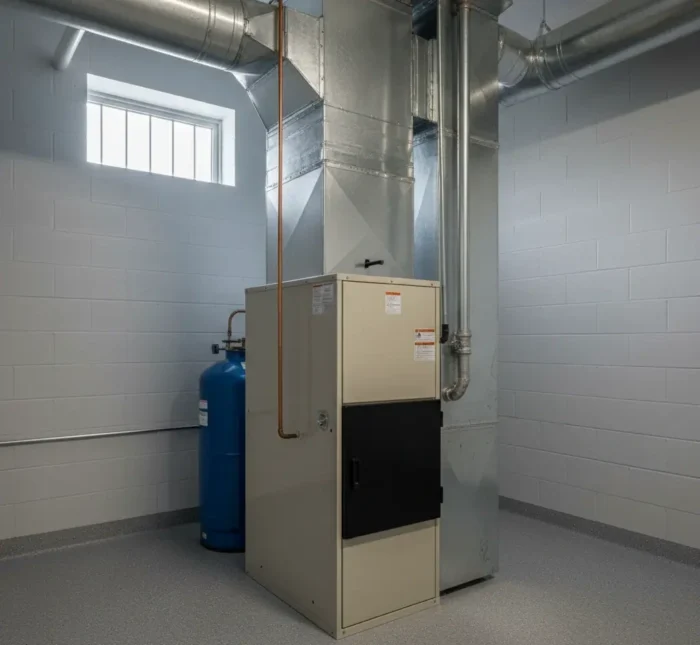
If your heating system is old enough to have a college degree, it’s likely screaming for retirement. In 2026, a furnace hitting the 20-year mark isn’t just “old”—it’s a liability. When you start experiencing “the cycle”—frequent $400 repair bills, weird clanking noises at 3 AM, and a house that never quite feels warm—replacement becomes the only logical financial move.
Continuing to patch up a two-decade-old unit is like pouring premium fuel into a car with a blown engine. Beyond just reliability, the cost of oil furnace replacement is often offset by the sheer drop in your monthly energy consumption. Modern systems stabilize your long-term costs, turning a stressful winter into a comfortable, worry-free season.
Replacement Cost vs. Repair Cost: The 50% Rule
Homeowners often get stuck in “repair paralysis.” A typical repair for an oil heater usually lands between $350 and $950. On the surface, that feels more affordable than a full install. However, with the current economic shifts and rising labor rates, the cost of oil furnace replacement—which now averages $4,500 to $10,500—is a much better long-term play.
The Rule of Thumb: If a repair costs 50% of the furnace’s value, or if the unit is over 15 years old, stop spending money on “band-aids.” A new system delivers 15–20 years of peak performance, whereas a repair only guarantees that one part won’t break again.
Benefits of long term savings and efficiency
A new furnace is a major investment, and prices in 2026 reflect that. However, the high upfront cost of oil furnace replacement pays “dividends” in comfort and fuel savings. Modern burners are precision-engineered to squeeze every bit of thermal energy out of a gallon of oil.
Because modern units consume less fuel and provide much more consistent airflow, you stop seeing those terrifying spikes in your heating bill. At MileHi HVAC, we don’t just sell boxes; we provide flexible payment solutions and efficiency incentives to make this transition manageable for your family’s budget.
How Do Prices Vary by Type of Oil Furnace?
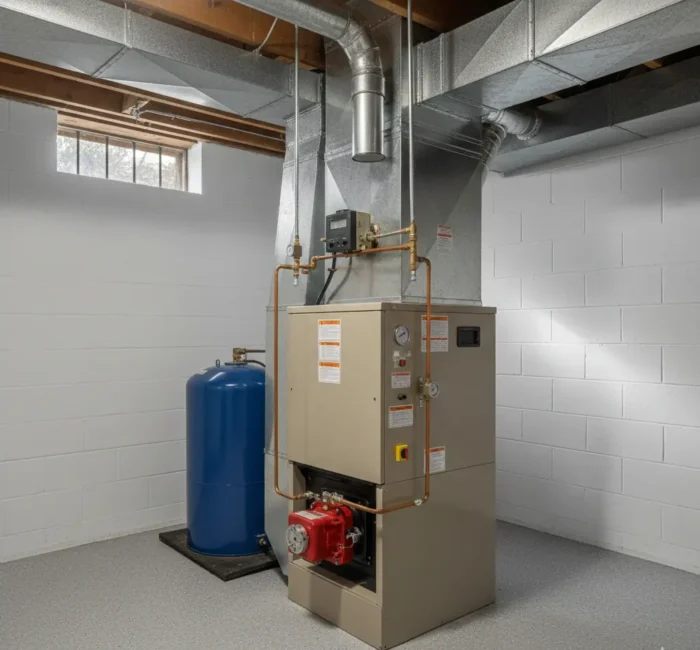
Standard Efficiency (80-89% AFUE)
Cost: $3,800 to $7,800 (Installed)
These are “budget-friendly” options, but they come with a hidden tax. They are fine for milder climates like the Carolinas or Georgia where the heat only kicks on occasionally. In a true winter climate, you’re essentially venting 20% of your paid fuel right out the chimney.
High-Efficiency (90-97% AFUE)
Cost: $6,500 to $9,800 (Installed)
The sticker price is higher today, but if you’re in a cold state like Vermont or Colorado, you’ll save $250–$400 every year. Over the unit’s lifespan, that’s up to $6,000 back in your pocket. The “efficiency gap” in price is usually around $2,000—which pays for itself in about five to seven winters.
Available Incentives
In 2026, the government offers roughly $200 for high-efficiency upgrades, while local utility companies often provide rebates up to $700. We help our clients track these down because they significantly lower the initial cost of oil furnace replacement.
What Impact Does Home Size Have on Pricing?
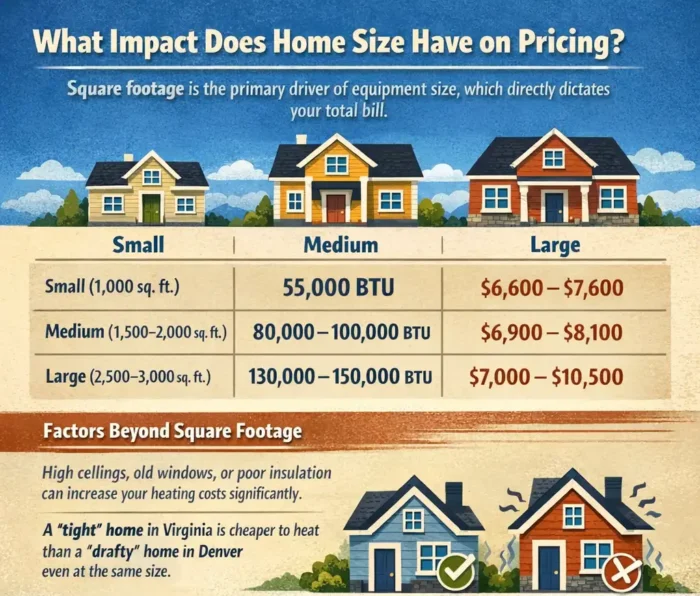
Square footage is the primary driver of equipment size, which directly dictates your total bill.
| Home Size | Required BTU | Estimated Cost (Installed) |
| Small (1,000 sq. ft.) | 55,000 BTU | $6,600 – $7,600 |
| Medium (1,500-2,000 sq. ft.) | 80,000 – 100,000 BTU | $6,900 – $8,100 |
| Large (2,500-3,000 sq. ft.) | 130,000 – 150,000 BTU | $7,000 – $10,500 |
Factors Beyond Square Footage
I’ve seen 1,800-square-foot homes that need a “Large” furnace because they have 12-foot ceilings or drafty, 100-year-old windows. If your insulation is poor, your furnace has to work double-time. A “tight” house in Virginia will always be cheaper to heat than a “leaky” house in Denver, even if they are the exact same size.
BTU Requirements by Climate
- Gulf Coast: 20-30 BTU/sq. ft.
- Mid-Atlantic: 30-45 BTU/sq. ft.
- Cold Mountains (Denver): 45-55 BTU/sq. ft.
- Northeast/Upper Midwest: 50-60+ BTU/sq. ft.
Pro Tip: Don’t let a contractor eyeball it. We use precise calculations to ensure your furnace isn’t too big (which wastes fuel) or too small (which leaves you shivering).

Common mistakes that increase replacement costs
Choosing Size Based on Old Furnace
Your old furnace is probably too big. Contractors 20 years ago oversized everything. If you just match it, you’re buying more furnace than you need and paying higher bills forever.
Get a heat load calculation. It’s free with quotes.
Skipping Efficiency Comparisons
People see the price tag and stop looking. They don’t calculate what they’ll spend on fuel over 10 years. In cold places, high-efficiency almost always costs less long-term.
Run the numbers before you decide.
Ignoring Ductwork Condition
Bad ducts waste 20-30% of your heat. You’re heating your attic instead of your bedroom. If your ducts are shot, fix them now. Otherwise your shiny new efficient furnace is still throwing money away.
Forgetting About Rebates
Federal and utility rebates can save you $300 to $750. Most people never claim them because nobody told them about it.
If your contractor doesn’t bring up rebates, that tells you something about how much they care.
Best practices for oil furnace replacement
Schedule During Off-Peak Seasons
Install in spring or fall. You’ll pay less and get better attention. We’re not slammed so we have time to do it right.
Emergency winter replacements? Way more expensive.
Choosing the Right Contractor
As choosing the right furnace is important, it is the same as choosing the right contractor. Your system will only work efficiently and in the longer run if it is properly installed. At MileHi HVAC our team inspects home specific needs and professionally installs your furnace.
Verify Contractor Credentials
Check the license. Confirm insurance. Look at BBB ratings. Read recent reviews. Ask for references from the last few months.
Takes an hour. Saves you thousands in headaches.
Understand Warranty Coverage
Equipment warranties cover parts for 5-10 years. Labor is 1-5 years. Know what’s covered and what voids it. Skipping annual maintenance usually kills the warranty.
Read the fine print.
Plan for Annual Maintenance
Tune-ups cost $150-250. They catch problems before they become $2,000 repairs. They also add 3-5 years to your furnace’s life.
Most warranties require it anyway.
Knowing When to Replace Your Oil Furnace
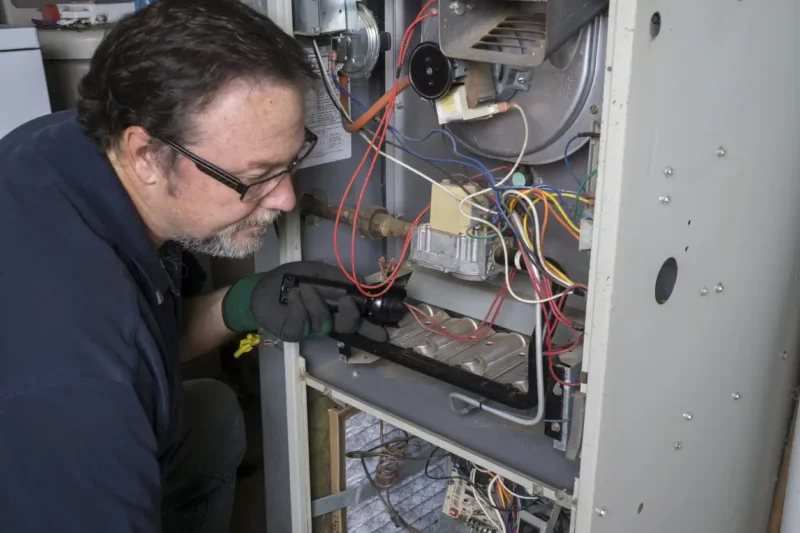
If your furnace is pushing past the 15-year mark and your latest repair estimate just made your jaw drop, it’s likely time to stop patching and start replacing. I’ve seen homeowners drop $2,000 on a “zombie” furnace, only to have a different, even more expensive part fail six months later.
Your energy bills are also a dead giveaway. If you’re paying significantly more each winter despite keeping the thermostat at the same temperature, your furnace is losing its grip on efficiency. Modern 2026 models are often 20–25% more efficient than their predecessors—that’s not just a stat; it’s actual cash staying in your wallet every month.
Here’s my rule of thumb: If you’ve called a tech for three repairs in two years, or if you see visible rust and cracking on the heat exchanger, stop. Those aren’t just annoying breakdowns; they are serious safety risks like carbon monoxide leaks.
Additional Costs to Consider
Most contractors give you a base quote, but the final bill usually looks a little different. A few things commonly get missed in the initial estimate:
- Asbestos testing/removal — Got an older home from the 70s or earlier? Testing costs $250–$700. If something shows up, removal is another $700–$2,200. Non-negotiable.
- Oil tank issues — A corroded or aging tank needs to go. Above-ground replacements run $1,000–$4,300. Underground? Budget up to $6,200 once digging is involved.
- Condensate drainage — High-efficiency units create acidic water that needs somewhere to go. No existing drain nearby? That’s $300–$600 extra right there.
- Chimney relining — Upgrade your furnace type and suddenly the old flue doesn’t meet code anymore. Relining runs $1,500–$4,000 depending on the setup.
- Rerouting ducts or vents — Even shifting the unit a few feet means new runs and extra hours on the clock.
Ask your contractor to walk through all of this before anything gets signed.
How to Save Money When Replacing an Oil Furnace
Nobody wants to overpay for a furnace. Here’s what actually moves the needle:
Pick the Right Time of Year
Book in spring or fall. Winter installs come with a premium because everyone needs heat yesterday. Off-season jobs are cheaper, less rushed and honestly done better.
Don’t Settle for One Quote
Call three different contractors minimum. I’ve seen the same job quoted at a $1,200 difference. That gap is real money.
Chase Down Every Rebate
Federal and utility rebates together can knock $500–$750 off your total. Most people never see that money because they didn’t ask. Bring it up before you choose a unit, not after.
Do Everything at Once
Ducts need work? Oil lines look rough? Handle it all in one visit. Separate trips mean separate labor charges — combining saves you more than you’d expect.
Keep Up With Annual Maintenance
A yearly tune-up costs $150–$250 and keeps your warranty intact. Skip it and you’re one cold morning away from a bill that hurts.
What most guides don’t tell you
Oil vs. Natural Gas Conversion Costs
It’s tempting to think about switching to gas during a replacement. However, running new gas lines to your home usually costs between $2,000 and $5,000. While gas is often cheaper per BTU, the math only works if the gas main already reaches your street. If you have to pay to bring lines in from miles away, you’ll likely never see a return on that investment.
Impact of Oil Tank Location
Outdoor tanks in frigid climates are a massive headache. When the temperature plunges, oil gets “thick” (paraffin gelling), which chokes the system and tanks your efficiency. Indoor or buried tanks stay warmer and perform much better in the dead of winter. If you’re thinking about moving your tank, do it during the furnace install to save on labor.
Condensing vs. Non-Condensing Models
High-efficiency furnaces are “condensing” units, meaning they capture extra heat from the exhaust. The byproduct is acidic water that needs a dedicated drain. In older homes, setting up this drainage can add $300 to $600 to your bill. Non-condensing models are simpler to install but will cost you more in fuel every single month. It’s a classic “pay now or pay later” scenario.
The Small Delivery Trap
Efficient furnaces use less oil, which sounds like a total win. But remember: many oil companies have minimum delivery requirements. If you have a small tank and your usage drops significantly, you might find yourself hitting those minimums more often, which can actually bump up your cost-per-gallon. It’s not a dealbreaker, but it’s a detail you’ll want to coordinate with your oil provider.
Final Thoughts
So understanding oil furnace replacement cost is beyond only considering the initial price tag. This approach helps you in making right and informed decisions. Although this decision is costly but due to higher efficiency, less fuel consumption and fewer repairs this is the smartest investment which also does not disturb your budget and you will spend the winter season in complete comfort without any problem.
Whenever you make a decision for Furnace replacement in Denver, CO feel free to contact our team at Milehi HVAC we are always available for providing professional services according to your needs
Frequently Asked Questions
What’s the typical lifespan of an oil furnace?
Most oil furnaces last 15–20 years with regular maintenance. Past this age replacement becomes more cost-effective than repairs.
Can I reduce the oil furnace replacement cost with rebates or financing?
Yes Many homeowners qualify for manufacturer rebates, energy incentives or financing plans ask MileHi HVAC for guidance.
How long does replacement take?
A typical oil furnace replacement installation is completed in 1–2 days, depending on work scope.
Will a new furnace improve my home’s energy efficiency?
Absolutely modern models have higher AFUE ratings and use less fuel for the same heating output.
What’s the difference between replacing the burner and replacing the entire furnace?
Replacing just the burner oil burner replacement cost is cheaper in the short term but if the furnace is old or inefficient a full furnace replacement is often wiser.
Is it worth replacing a 20-year-old furnace?
Yes, a 20-year-old furnace is inefficient and costly to repair. Replacing it improves comfort, reliability, and energy savings.
How much does it cost to replace an oil boiler?
Replacing an oil boiler costs around $4,000–$9,000, depending on size, efficiency, and installation. High-efficiency units save fuel over time.