

Nobody wants to walk into their basement and see a puddle spreading under the water heater. It’s one of those moments that makes your stomach drop because you know something’s wrong.
When water heater is leaking from bottom, you’re usually looking at anything from a valve that needs tightening to a tank that’s about done. Figuring out which one it is can mean the difference between a quick fix and shelling out for a whole new unit.
How To Pinpoint the Source of the Water Leak
Don’t start tearing things apart until you know what you’re dealing with. First thing: cut the power. If you’ve got an electric heater, flip the breaker. Gas model? Turn that valve to pilot.
Grab some towels and dry everything off. Check the floor, check the tank bottom. Give it 15 minutes and come back. Whatever’s wet again is where your problem’s coming from.
Check the Drain Valve
That drain valve down near the bottom? That’s what you use when you’re flushing out gunk during maintenance. And yeah, it’s also one of the usual suspects when a hot water tank leaking from bottom shows up.
See if there’s water beading up around where it opens. Grab a wrench and give it a gentle turn to tighten it. Still wet? The valve’s probably shot and you’ll need a new one.
Inspect the Temperature and Pressure Relief Valve
Your T&P valve is basically a safety switch that keeps things from getting dangerous. There’s a pipe attached to it that goes down the side of your tank. When water drips from that pipe, it ends up pooling around the bottom.
Lift the lever a bit to test it. Water should come out, then stop clean when you let go. If it just keeps dribbling, either the valve needs replacing or you’ve got too much pressure building up.
Examine the Tank Bottom
Here’s where things get real. The worst-case scenario is when the bottom of hot water heater leaking is actually the tank itself. Look for rusty patches, corrosion, or just straight-up wetness on the metal.
Get a flashlight under there if you can manage it. Corrosion looks like orange or brownish crud. If you’re seeing that, the tank’s rotted from the inside and there’s no fixing it.
The Paper Towel Test
This is a neat trick. Lay down dry paper towels around the base and right under that drain valve. You’ll be able to see exactly where the water hits first. If the towels by the valve are bone dry but the ones next to the tank are soaked, you’ve got an internal leak.
Read More: Water Leaking From Pressure Relief Valve on Water Heater.
Common Causes of Water Heater Leaks From the Bottom
A bunch of different things can make a hot water tank leaking from bottom happen. Knowing what they are helps you figure out if this is something you can tackle or if you need to call someone.
1. Faulty Drain Valve
That drain valve is either plastic or brass, and it’s sitting down there at the bottom for when you need to do maintenance. After a while, the washer inside breaks down or crud builds up and stops it from sealing right. That’s when you get a constant water heater dripping from bottom situation.
2. Sediment Buildup and Corrosion
Denver’s got hard water, which is a pain. All those minerals sink to the bottom of your tank and turn into a crusty layer. That crust holds heat right against the tank floor and causes tiny cracks. Once the glass lining inside cracks, the steel underneath starts rusting. A bottom of hot water heater leaking because of corrosion? That usually means your tank’s lived its life.
3. Temperature and Pressure (T&P) Relief Valve
This safety valve has a tube running down the side of your heater. When it opens up to let out extra pressure, water goes down that tube and puddles on your floor. Even though the valve’s up top or on the side, the water tricks you into thinking it’s a bottom leak.
4. Failed Internal Tank
If there’s a hole in the actual tank inside, water seeps into the insulation around it and works its way down to drip out the bottom cover. That’s structural damage and you can’t patch that kind of thing.
Immediate Actions To Take for a Leaking Water Heater
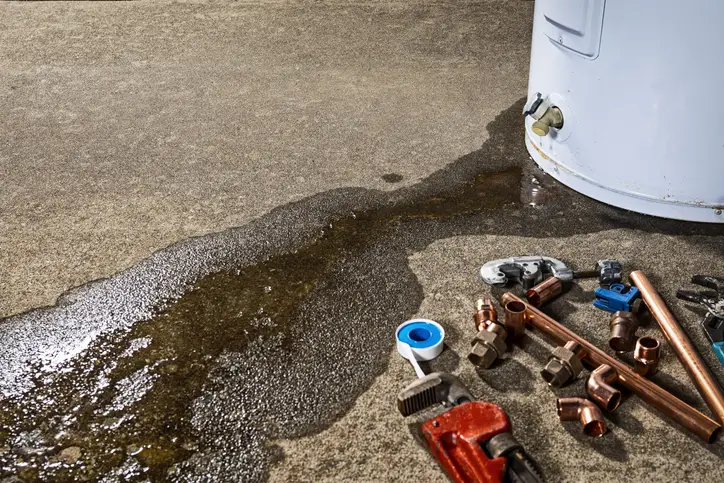
Found your water heater leaking from bottom? Here’s what you do right now to keep things from getting worse:
Turn Off the Power: Electric? Hit that breaker. Gas? Twist the dial to “Pilot” or all the way to “Off.”
Shut Off the Water: Find that cold water pipe coming in (usually has a blue handle) and crank it clockwise so no more water gets in.
Drain the Tank: Hook up a garden hose to the drain valve and send it to a floor drain or out the door. Gets rid of the pressure and stops more water from coming out.
Call MileHi HVAC: Want someone who knows what they’re doing to check it out fast? Our Denver heater maintenance service team will get your hot water situation sorted.

Prevention and Maintenance
Here’s the thing: you can dodge most of these leaks if you just take care of your heater. A little maintenance goes a long way and keeps your bills from spiking.
Flush the Tank Annually
Once a year, drain off a few gallons. Gets rid of that sediment before it turns into “hot spots” that eat away at your tank.
Check the Anode Rod
This rod’s called “sacrificial” because it takes the hit from all the corrosive stuff so your tank doesn’t have to. Swap it out every 3 to 5 years.
Install a Water Softener
Minerals cause a ton of problems. Get a water softener and you could literally double how long your heater lasts.
Set the Right Temperature
Keep your heater at 120 degrees. Cuts down on the chances of it overheating or building up crazy pressure.
When To Call a Professional for Water Heater Leaks
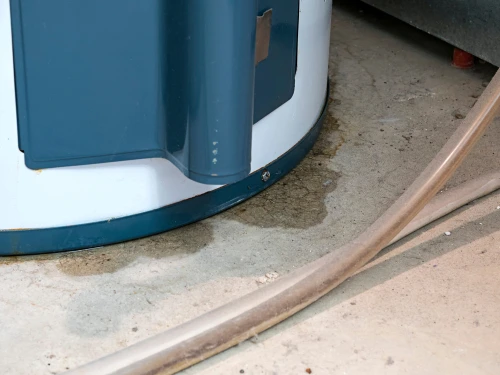
Some stuff you just shouldn’t mess with. Knowing when to call in the pros saves you headaches and keeps you safe.
Tank Corrosion
When water heater is leaking from bottom because the tank’s corroded, you need a new one. Period. Trying to patch it is throwing money away and asking for a flood.
Getting a pro to install it means everything’s sized right, vented properly, and up to code. Licensed folks know how to handle gas lines and electrical without blowing anything up.
Gas Line Issues
Do not touch gas connections. Just don’t. Gas leaks can explode or poison you with carbon monoxide. Pros have the right gear and the training.
Smell gas around your water heater? Get out of there. Call the gas company and a licensed plumber once you’re somewhere safe.
Permit Requirements
Most places want a permit for water heater replacement. Professionals deal with all that paperwork and inspection stuff. If you DIY it, you’ll probably fail inspection and kill your warranty.
Complex Repairs
Got multiple leaks? Weird banging noises? Same problem keeps coming back? That’s a sign something bigger’s going on. Experienced techs can get to the bottom of it quick.
MileHi HVAC gives you a straight answer about what’s wrong. Sometimes you can fix it, but a lot of times replacement just makes more sense money-wise.
Conclusion
Spotting that your water heater is leaking from bottom means it’s time to do something about it. Could be a valve that needs five minutes of work, could be a tank that needs replacing. Either way, move fast so you don’t end up with mold or worse damage. Need someone reliable? MileHi HVAC’s Denver heater maintenance service has your back. Give us a call and we’ll get your water system running right again.
FAQs
What to do if the water heater is leaking from the bottom?
Turn off the power and water supply immediately. Drain the tank, identify the leak source, and call a professional if the tank itself is corroded.
How long will a hot water heater last after it starts leaking?
If the tank is leaking, it could fail within hours to days. Valve leaks may hold longer, but don’t delay repairs as sudden failure can cause extensive flooding.
Can I still use my water heater if it’s leaking?
No, stop using it immediately. Continuing operation increases flood risk, wastes water, and can cause electrical hazards or complete tank rupture.
Is a water heater leaking from the bottom an emergency?
Yes, treat it as an emergency. Even small leaks can quickly escalate to major flooding, causing thousands in property damage and leaving you without hot water.
What’s the average cost to fix a bottom leak?
Valve replacement runs $150-$300. Tank replacement costs $800-$2,500 depending on size and type. Get multiple quotes for major work.