
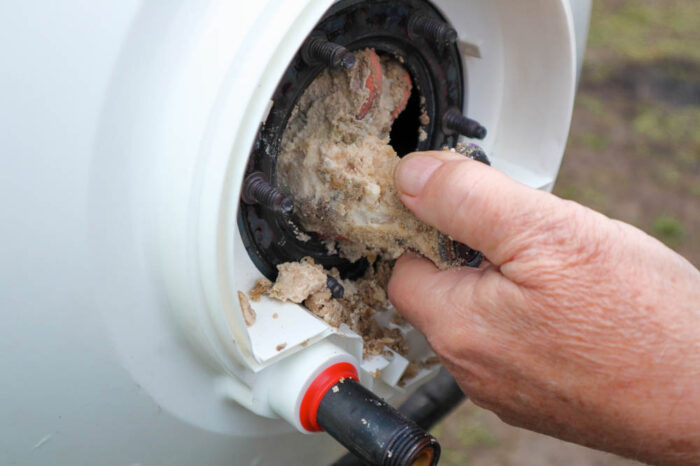
During the winter season hot water is the only thing that homeowners rely on for their everyday tasks like cooking, cleaning, washing dishes and bathing. Sometimes an issue occurs as sediment collects at the bottom of the hot water tank and many homeowners ask the question, is sediment in a hot water tank dangerous? So it can be dangerous. However at first it does not seem dangerous. Also it should not be fully ignored as with time it leads to costly repairs, high energy bills and safety risks.
At MileHi HVAC our team guides homeowners in understanding what is happening to their system and what steps they should take to avoid further heavy damages. This article breaks down what the risks, how it occurs and what are the possible solutions for dealing with this.
What Is Sediment in a Hot Water Tank?
Sediment means small tiny particles of calcium, magnesium from hard water which collects and settle down at the bottom of the tank with time. This issue is although rare but mostly occurs where there is hard water. Water heater sediment buildup occurs when these minerals are separated from water due to heating and slowly becomes a thick layer.
Is Sediment in Hot Water Tanks Dangerous?
Yes, sediment in hot water tanks is dangerous and is a serious concern for homeowners. Due to this buildup homeowners have to face several issues like:
overheating
This buildup at the bottom of the tank affects the heating elements and traps the heat which results in increasing internal temperature and overheating.
Tank damage
When a water heater produces more heat it results in track in tank lining and your system will totally fail.
pressure buildup
Due to excessive heat up pressure is also buildup and due to this leaks occur or tank failure.
Burn risks
When there is a poor heating system and extremely hot water is produced then there is risk of scalding.
Also due to sediment buildup the effective performance and lifespan of your water heater also affects and shortens.
How Sediment Affects Water Heater Performance
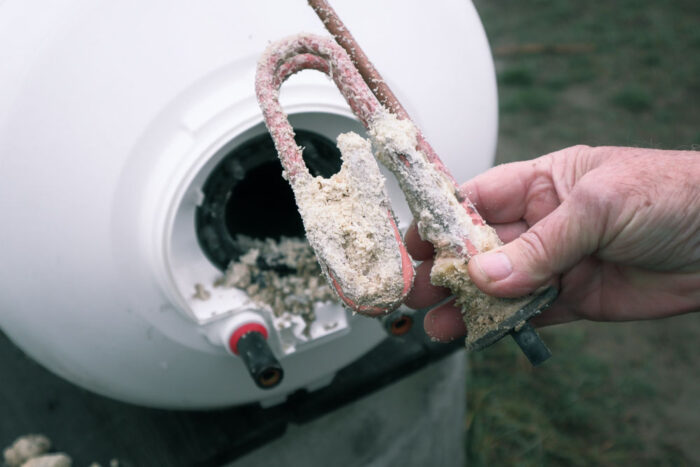
When sediment in a water heater builds and stays for a long time it disturbs the efficiency of the system. For heating water heating elements have to go through the sediment buildup leading to wasting energy and increasing utility bills. This efficiency is only due to the sediment buildup.
Another signal is noise. When water heatups at the bottom of the tank due to buildup it creates rambling and popping sounds.
Read More: Hot Water Heater Sediment Symptoms.
Hot Water Heater Sediment Symptoms
Recognizing hot water heater sediment symptoms earlier is very important for taking action on time and help prevent expensive damage.Common symptoms include:
- Inconsistent water temperature
- Strange noises like rambling and popping
- Cloudy or rusty water
- Sudden increase in utility bills
All these symptoms become worse with time if they remain ignored or you don’t flush the tank regularly.
What Does Water Heater Sediment Look Like?
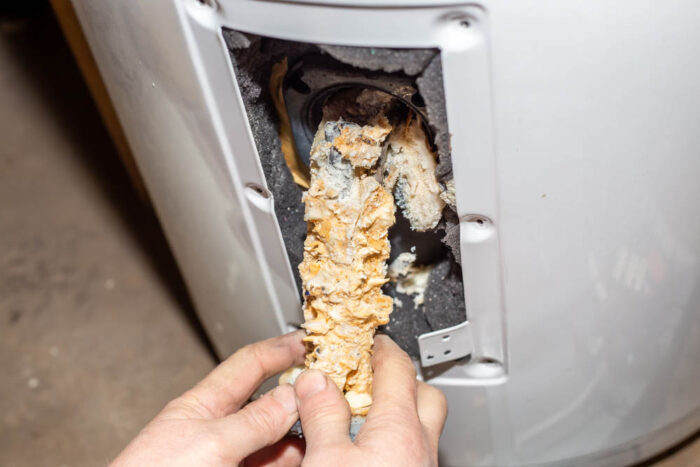
There is also a question: what does water heater sediment look like? So sediment appears as following:
- Residue left at the bottom of tank
- Rusted colored flakes
- White and grey sand particles
- Dusty water from taps
Also when you flush your tank you will clearly see what water heater sediment looks like.
Why Water Heater Sediment Build Up Is a Serious Problem
In addition to decreasing efficiency, persistent silt accumulation in water heaters speeds up the deterioration of important parts. Tank linings may erode, valves may clog, and heating elements may burn out more quickly.
This accumulation may eventually result in leaks or even an unexpected system collapse. To avoid long-term damage, expert HVAC companies like MileHi HVAC highly advise routine maintenance.
Can Sediment Damage Tankless and Gas Water Heaters?
Of course water heater/sediment buildup can cause problems in water heater systems of all kinds, including gas and tankless models, although it mostly affects tank water heaters. Sediment in water heaters increases gas consumption by obstructing heat transfer from the burner. Mineral scales can clog sensors and heat exchangers in tankless systems, lowering efficiency.
Ignoring sediment poses a threat to any system.
How to Prevent Sediment Buildup
Prevention is the best way to deal with the hazardous issues caused by sediment in hot water tanks. Homeowners can safeguard their systems in the following ways:
- At least once a year, flush the tank.
- In places with hard water, install a water softening.
- Make an appointment for yearly checkups with experts like MileHi HVAC
- Aging units should be replaced before significant sediment damage occurs.
- Frequent flushing eliminates loose material before it solidifies into dense layers.
When to Call a Professional
DIY flushing might not be sufficient if the sediment buildup is advanced. Heavy deposits can be safely removed by a qualified technician, who can also examine heating components and determine whether replacement is more economical than repair. We at MileHi HVAC offer professional diagnostics to maintain the dependability, efficiency and safety of your system.

Final Thoughts
Is sediment in hot water dangerous ? Definitely yes. Even though sediment buildup begins modestly, if left unchecked, it can quietly lower efficiency, increase energy costs, and pose major safety issues. The secret to safeguarding your house is to recognize the warning signals, be aware of hot water heater sediment symptoms and plan regular maintenance.
You can rely on MileHi HVAC, your partner in efficiency, safety, and comfort, for professional water heater maintenance, inspections, and long-term solutions. Contact MileHi HVAC for expert Denver heater maintenance and ensure your system operates at peak efficiency all season long.
FAQs
Is silt in a hot water tank instantly hazardous?
It gets dangerous over time, though not usually. Overheating and system failure are more likely the longer sediment remains in the system.
How frequently should my water heater be flushed?
For most homes, once a year is ideal. Every six months, homes with hard water may need to be flushed.
Can sediment lead to a leak in my water heater?
Indeed. Leaks result from sediment’s ability to retain heat, harm tank linings, and speed up corrosion.
Does sediment have an impact on the quality of water?
Indeed. It may result in mineral taste in hot water, foul odors, and murky water.
Should I replace my water heater if there’s heavy sediment?
If the tank is old and heavily damaged, replacement may be more cost-effective. A professional inspection from MileHi HVAC can help you decide.