


Finding out when water heater is leaking from bottom could give anxiety to any homeowner. The floor puddle usually brings up sudden fears of flooding, costly repairs, or a total system replacement. Bottom leak can point to severe problems, but that doesn’t mean every case is a total loss.
In this comprehensive guide, the experts at MileHi HVAC discuss what causes bottom leaks, how to properly locate the source, and when to repair and or replace your unit. Early recognition of these signs can save you money, avert damage, and save your home.
How To Pinpoint the Source of the Water Leak
Don’t start tearing things apart until you know what you’re dealing with. First thing: cut the power. If you’ve got an electric heater, flip the breaker. Gas model? Turn that valve to pilot.
Grab some towels and dry everything off. Check the floor, check the tank bottom. Give it 15 minutes and come back. Whatever’s wet again is where your problem’s coming from.
Check the Drain Valve
That drain valve down near the bottom? That’s what you use when you’re flushing out gunk during maintenance. And yeah, it’s also one of the usual suspects when a hot water tank leaking from bottom shows up.
See if there’s water beading up around where it opens. Grab a wrench and give it a gentle turn to tighten it. Still wet? The valve’s probably shot and you’ll need a new one.
Inspect the Temperature and Pressure Relief Valve
Your T&P valve is basically a safety switch that keeps things from getting dangerous. There’s a pipe attached to it that goes down the side of your tank. When water drips from that pipe, it ends up pooling around the bottom.
Lift the lever a bit to test it. Water should come out, then stop clean when you let go. If it just keeps dribbling, either the valve needs replacing or you’ve got too much pressure building up.
Examine the Tank Bottom
Here’s where things get real. The worst-case scenario is when the bottom of hot water heater leaking is actually the tank itself. Look for rusty patches, corrosion, or just straight-up wetness on the metal.
Get a flashlight under there if you can manage it. Corrosion looks like orange or brownish crud. If you’re seeing that, the tank’s rotted from the inside and there’s no fixing it.
The Paper Towel Test
This is a neat trick. Lay down dry paper towels around the base and right under that drain valve. You’ll be able to see exactly where the water hits first. If the towels by the valve are bone dry but the ones next to the tank are soaked, you’ve got an internal leak.
Read More: Water Leaking From Pressure Relief Valve on Water Heater.
The Role of the Drain Valve and Internal Components
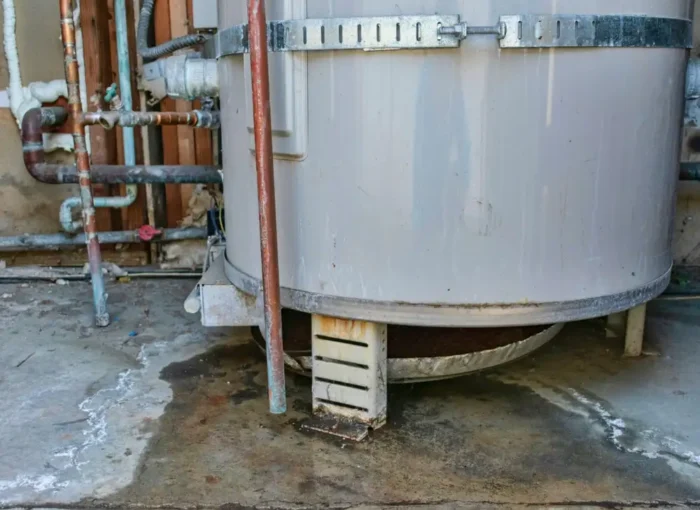
Not every leak at the bottom of the tank is coming from the tank itself. Occasionally, parts close to the bottom are the problem.
Knowing the exact source of the leak can prevent an unnecessary replacement and make sure that the appropriate repair is made.
Faulty or Loose Drain Valve
The drain valve, located at the bottom of the tank, also allows you to flush water from the tank for cleaning. When it gets loose or worn, it can drip nonstop.
Sometimes, all you need to do is tighten up a valve and/or change out a seat to solve the problem.
Pressure-Related Stress on the Tank
High pressure within the water heater can cause water to escape through the weakest points. Over time, this strain wears down interior coatings and seals.
Although pressure problems usually begin elsewhere in the system, the tank bottom is where the damage is most apparent.
Why Bottom Leaks Should Never Be Ignored
A water heater leak at the bottom is different from leaks at pipes or fittings. Due to gravity, water accumulation underneath is usually a sign of internal issues that may take the shape of deterioration in the long run. Floor damage, mold growth, and compromised structural supports can be caused by even the smallest leaks. Responding quickly will allow you to minimize damage and prevent an unexpected system failure.
Common Reasons a Water Heater Leaks From the Bottom
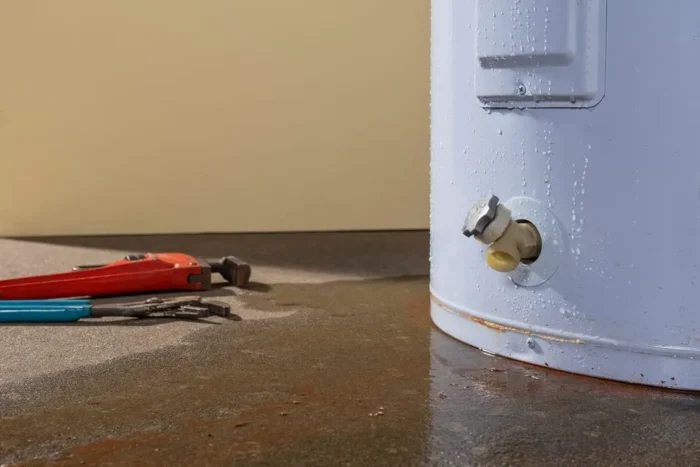
Bottom leaks are not all created equal. Some result from condensation or valve discharge, while others signal internal tank damage. A proper diagnosis is needed before a decision on the next step can be made.
Knowing these causes can help homeowners make decisions about whether it’s safe to repair or if they’ve got an easy option with a replacement.
Condensation vs. True Tank Leaks
In humid conditions or heavy use, moisture can develop on the outside of the tank and drip downward. This can look like a leak, but it typically stops when the system balances out.
However, a real leak goes on with the heater off. A constant leak is usually an internal part failure or tank rust.
Internal Tank Corrosion and Sediment Buildup
Minerals in water accumulate at the bottom of the tank as you have used long time. This sediment insulates heat and corrodes from within the tank outward.
Once corrosion forms bore holes in the tank lining, water leaks at the bottom, and fixing it is not a viable option. This is the reason that most replacements are due to.
Why Water Heater Leaks Are Often Misdiagnosed
Homeowners occasionally mistake water heater leaks for other HVAC or furnace issues, particularly if multiple systems are housed in the same utility space.
Such confusion can delay necessary repairs and result in unwanted troubleshooting on other systems.
Confusion With Furnace Safety Components
Somebody is always talking about a furnace blower reset button, and in homes where the water heater and furnace are adjacent, homeowners tend to look at completely unrelated things like that as a possible source of a dripping water leak.
They are both important heating safety features, but neither is related to water heater leaks, and they should be taken care of separately.
Reset Buttons and Repeated System Issues
Some homeowners have the misconception that the water gathering is related to a furnace reset button not working or electrical outages.
In some instances, constant visits from the serviceman to the tune of furnace reset button keeps needing resetting can draw attention away from the real culprit—a water heater tank on the verge of disaster needing urgent replacement.
Immediate Actions To Take for a Leaking Water Heater
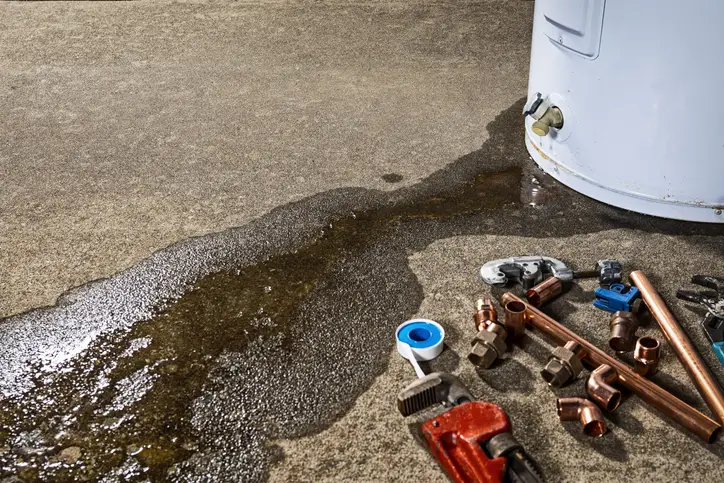
Found your water heater leaking from bottom? Here’s what you do right now to keep things from getting worse:
Turn Off the Power: Electric? Hit that breaker. Gas? Twist the dial to “Pilot” or all the way to “Off.”
Shut Off the Water: Find that cold water pipe coming in (usually has a blue handle) and crank it clockwise so no more water gets in.
Drain the Tank: Hook up a garden hose to the drain valve and send it to a floor drain or out the door. Gets rid of the pressure and stops more water from coming out.
Call MileHi HVAC: Want someone who knows what they’re doing to check it out fast? Our Denver heater maintenance service team will get your hot water situation sorted.

When Repair Is Possible vs When Replacement Is Required
Not every dribble out of the bottom of your water heater is the end of the line. It’s a matter of source, age, and the general condition of the appliance.
So getting it right early prevents you from throwing money away on stopgap solutions.
Situations Where Repair Makes Sense
Drain valve or external fitting leaks can be repaired quite easily, quickly, and cheaply.
Younger systems in good condition can sometimes be repaired with parts rather than replaced entirely.
Clear Signs Replacement Is the Best Option
Should rust wear through the tank, replacement is the only safe option. No sealant or patch can replace that.
The bottom line: Most tanks with bottom leaks that are older than 10–12 years are just about done.
Prevention and Maintenance
Here’s the thing: you can dodge most of these leaks if you just take care of your heater. A little maintenance goes a long way and keeps your bills from spiking.
Flush the Tank Annually
Once a year, drain off a few gallons. Gets rid of that sediment before it turns into “hot spots” that eat away at your tank.
Check the Anode Rod
This rod’s called “sacrificial” because it takes the hit from all the corrosive stuff so your tank doesn’t have to. Swap it out every 3 to 5 years.
Install a Water Softener
Minerals cause a ton of problems. Get a water softener and you could literally double how long your heater lasts.
Set the Right Temperature
Keep your heater at 120 degrees. Cuts down on the chances of it overheating or building up crazy pressure.
When To Call a Professional for Water Heater Leaks
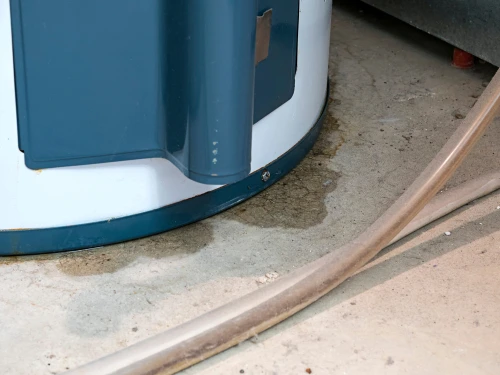
Some stuff you just shouldn’t mess with. Knowing when to call in the pros saves you headaches and keeps you safe.
Tank Corrosion
When water heater is leaking from bottom because the tank’s corroded, you need a new one. Period. Trying to patch it is throwing money away and asking for a flood.
Getting a pro to install it means everything’s sized right, vented properly, and up to code. Licensed folks know how to handle gas lines and electrical without blowing anything up.
Gas Line Issues
Do not touch gas connections. Just don’t. Gas leaks can explode or poison you with carbon monoxide. Pros have the right gear and the training.
Smell gas around your water heater? Get out of there. Call the gas company and a licensed plumber once you’re somewhere safe.
Permit Requirements
Most places want a permit for water heater replacement. Professionals deal with all that paperwork and inspection stuff. If you DIY it, you’ll probably fail inspection and kill your warranty.
Complex Repairs
Got multiple leaks? Weird banging noises? Same problem keeps coming back? That’s a sign something bigger’s going on. Experienced techs can get to the bottom of it quick.
MileHi HVAC gives you a straight answer about what’s wrong. Sometimes you can fix it, but a lot of times replacement just makes more sense money-wise.
Conclusion
Spotting that your water heater is leaking from bottom means it’s time to do something about it. Could be a valve that needs five minutes of work, could be a tank that needs replacing. Either way, move fast so you don’t end up with mold or worse damage. Need someone reliable? MileHi HVAC’s Denver heater maintenance service has your back. Give us a call and we’ll get your water system running right again.
FAQs
What to do if the water heater is leaking from the bottom?
Turn off the power and water supply immediately. Drain the tank, identify the leak source, and call a professional if the tank itself is corroded.
How long will a hot water heater last after it starts leaking?
If the tank is leaking, it could fail within hours to days. Valve leaks may hold longer, but don’t delay repairs as sudden failure can cause extensive flooding.
Can I still use my water heater if it’s leaking?
No, stop using it immediately. Continuing operation increases flood risk, wastes water, and can cause electrical hazards or complete tank rupture.
Is a water heater leaking from the bottom an emergency?
Yes, treat it as an emergency. Even small leaks can quickly escalate to major flooding, causing thousands in property damage and leaving you without hot water.
What’s the average cost to fix a bottom leak?
Valve replacement runs $150-$300. Tank replacement costs $800-$2,500 depending on size and type. Get multiple quotes for major work.